
Review
Good Luck, Have Fun, Don’t Die (2026)
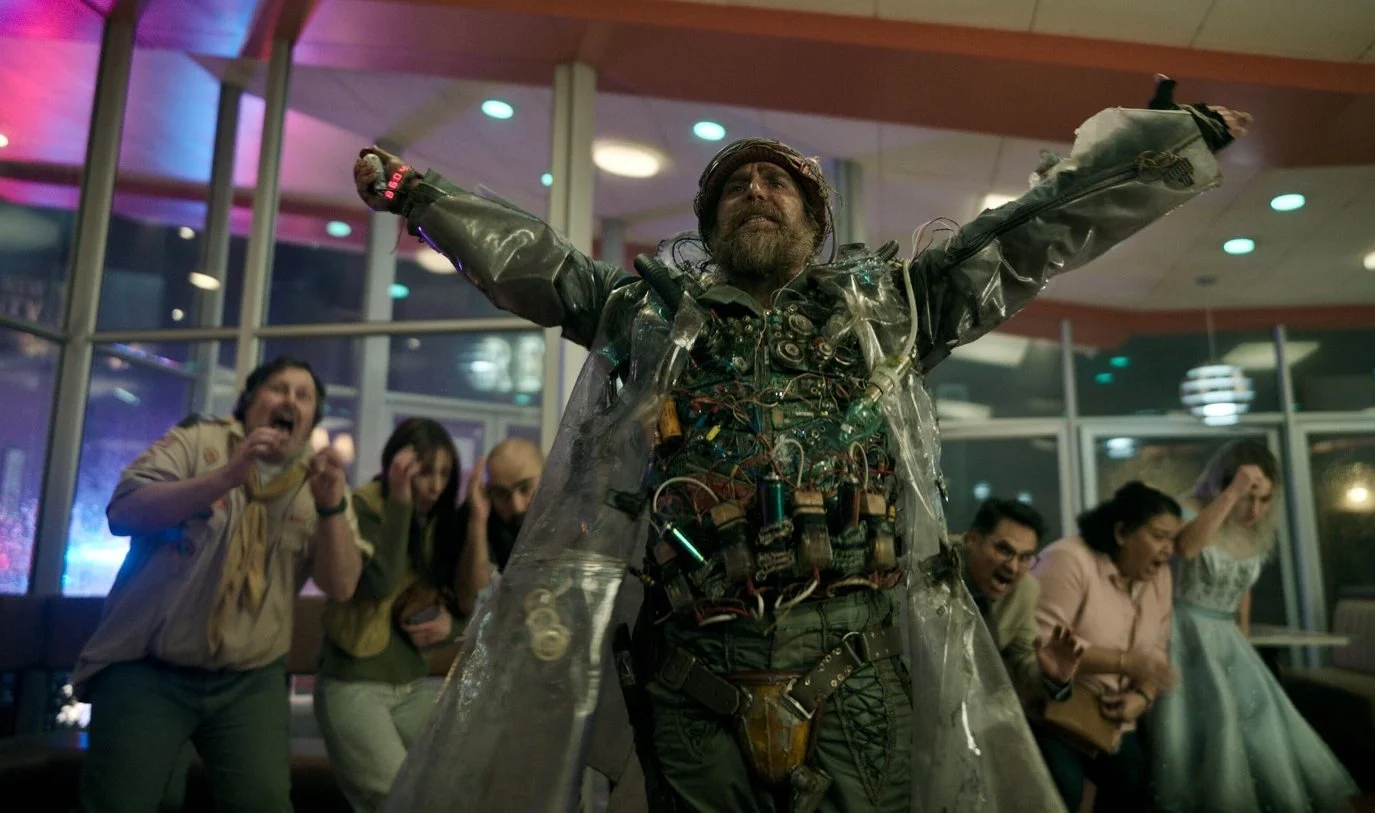
image: Entertainment Film Distributers limited
Director: Gore Verbinski
Writer: Matthew Robinson
Cast: Sam Rockwell, Haley Lu Richardson, Juno Temple, Zazie Beetz, Michael Peña, Asim Chaudhry, Tom Taylor
Run Time: 2h 14m
UK Rating: 15
8/10
Artificial Intelligence feels inescapable with even its harshest critics struggling to avoid its malign influence on what seems like every aspect of our culture. In what seems like no time at all it has permeated our day to day lives in ways that feel irrevocable, the genie is well and truly out of the bottle. So after warnings from the CEO of a prominent Generative A.I. company warns that the technology could overwhelm and take over the internet in less than six months and proponents are strongly advising a slow down on development, Good Luck Have Fun Don’t Die feels like a timely warning.
The film begins with customers in a busy Los Angeles diner too busy on their phones to interact with each other. They're interrupted by the dramatic arrival of an unnamed man (Sam Rockwell) claiming to be from the future. Behaving erratically and outfitted in what appears to be bits of rubbish, the man warns that the world as they know it is coming to the end. This apocalypse is set to be the result of artificial intelligence breaking free of its constraints and achieving singularity. Resulting in a grim Terminator-esque dystopian future in which humans that aren’t connected to the “Machine God’s” VR headsets or hubs are hunted down. He’s been sent back (this is his 118th attempt) to find the optimal group of the diner’s patrons to take across town and alter the code base of the AI. So he sets off with a ragtag group that includes two school teachers (Michael Peña and Zazie Beetz), a skittish, bereaved mother (Juno Temple) and despite the time traveller’s reluctance a young woman dressed as a princess (Haley Lu Richardson) to prevent the man’s nightmarish future. Interspersed with this are the stories of the group’s lives and how they’ve been negatively impacted by the invasive creep of technology.
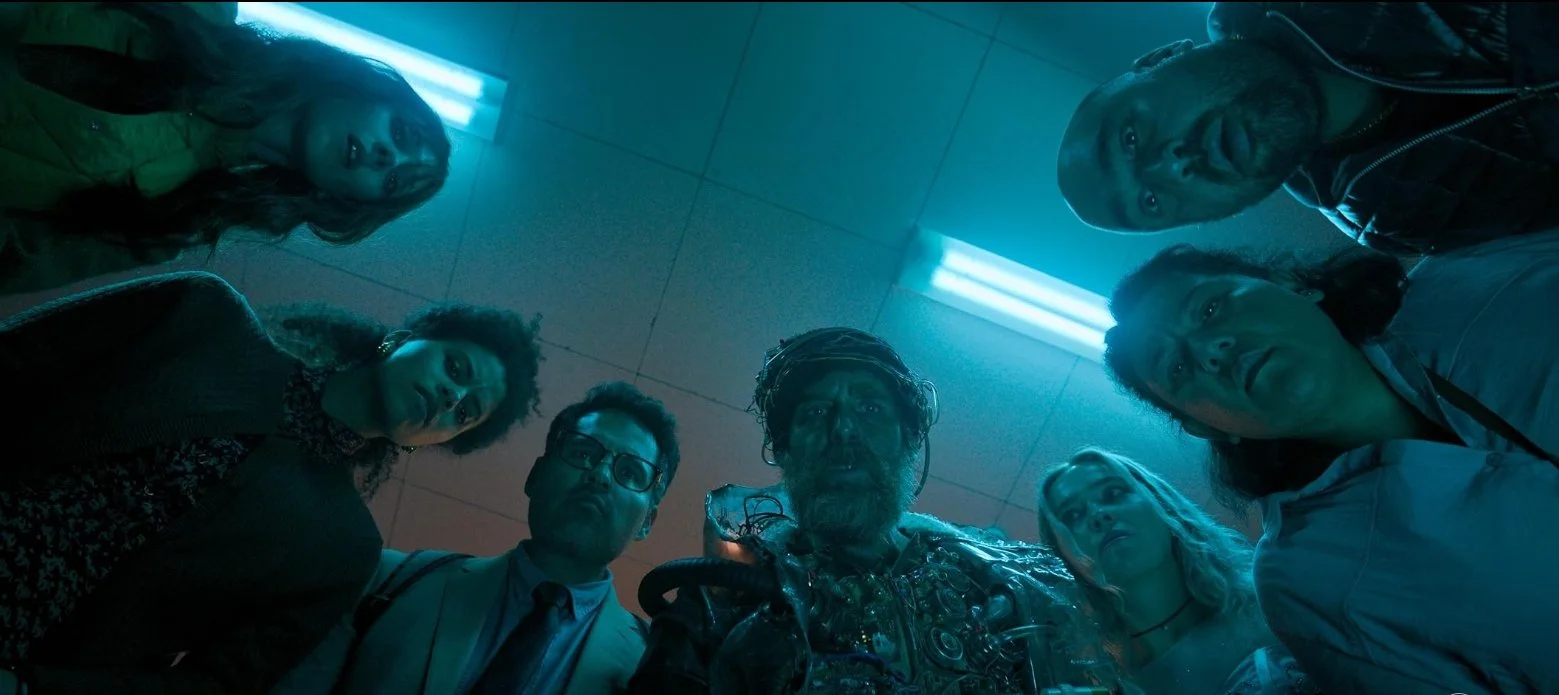
image: Entertainment Film Distributers limited
In an era where many films appear to have lost a human fingerprint, being replaced with a slick, soulless production line, Good Luck, Have Fun, Don’t Die feels reassuringly messy. A hodgepodge of ideas and themes that don’t always coalesce as well as you would like but the film has often moved on to another idea before you can complain. With the present day plot constantly moving forward it’s the anthology style flashbacks that are left to flesh out the characters and provide a little respite. These are like miniature Ray Bradbury stories tinged with the bleakness of Charlie Brooker’s Black Mirror, speculative fiction that is deeply uncomfortable. The highlight of these is undoubtedly Juno Temple’s section which could have been successfully released as a short film. Her character Susan, is a grieving mother offered what at first seems to be a miraculous salve for her misery but of course things go quickly awry. This is the film at its best offering the bleakest, most savage satire I can remember from a Hollywood film and one of the most raw critiques of the senselessness of gun violence I’ve ever seen. It’s all presented within Temple’s exhausted resignation, the comedy never undercutting the reality of her tragedy.
Much of the film is hinged upon Sam Rockwell’s manic performance, which is a role that you can’t imagine any other actor giving the same energetic commitment. Despite this crazed state Rockwell’s innate likeability shines through, his early threats against the diner’s patrons are largely endearing, feeling more desperate than dangerous. The Man from the future’s mania contrasts nicely with his shellshocked companions, each having prior reasons for mistrusting A.I. Haley Lu Richardson’s character Ingrid is another highlight, she’s afflicted with an allergy to technology that causes nose bleeds if she’s in the vicinity of electronic devices. Unlike Chuck in Better Call Saul (2015-2022), this isn’t psychosomatic and despite how much she attempts to avoid it A.I finds a way to insert itself into her life. The weakest of these side characters are Zazie Beetz and Micheal Peña whose section feels the least fleshed out and has the most obvious and cliched critique of teens and their phones. Still, they do well with what little they have, although the film at times forgets that they’re along for the ride.
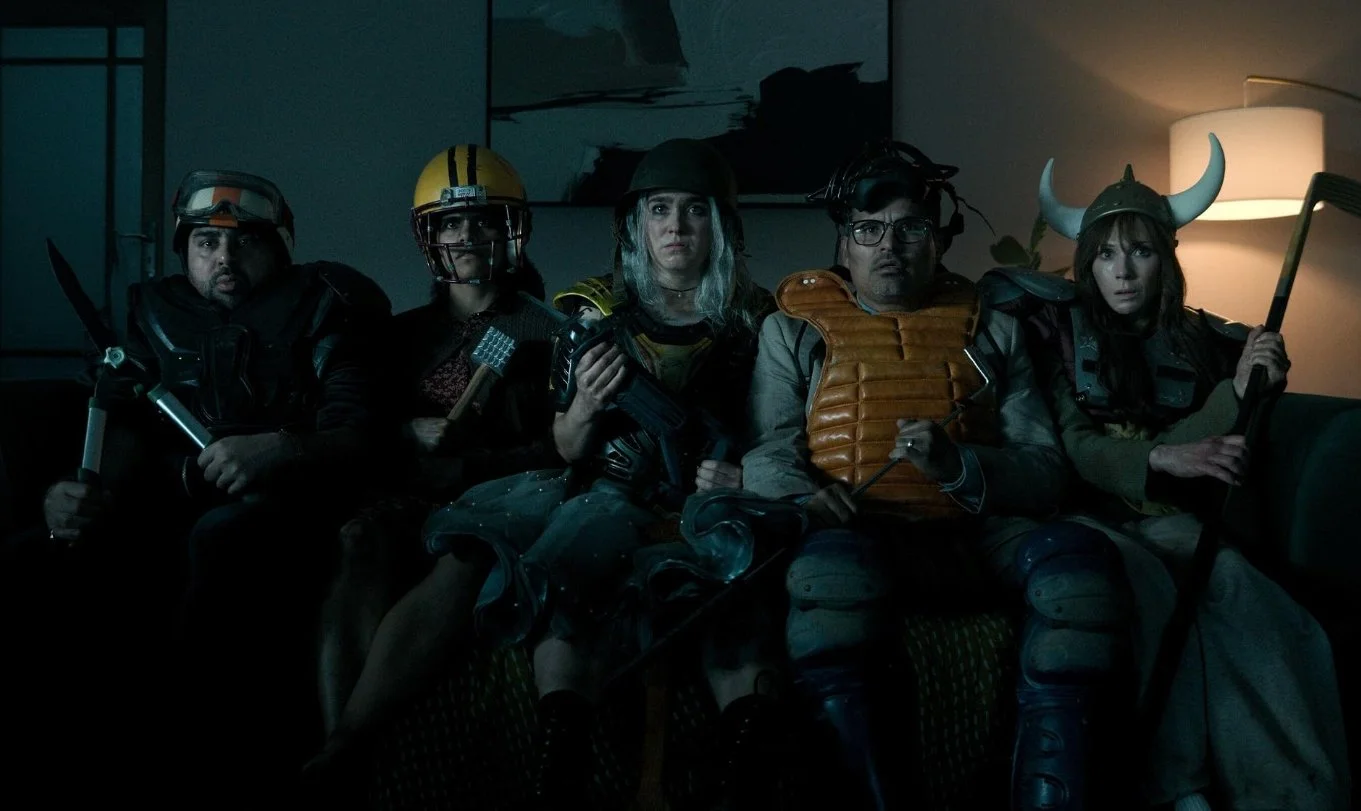
image: Entertainment Film Distributers limited
Before his stint helming big budget Disney franchises Gore Verbinski got his start shooting videos for notable 90’s punk rock acts like L7, NOFX and Bad Religion (he was also in the short lived band Daredevils with Epitaph records and Bad Religion founder Brett Gurewitz). He brings a sense of righteous anger twinned with a casual irreverence that helps paper over the cracks in what is frequently an overstuffed mess. Screenwriter Matthew Robinson originally pitched one of the sections as a television show called Don't Trust Anyone Under 30 and then added to the story once he decided to adapt it to a film. It’s difficult to not think Good Luck, Have Fun, Don’t Die might have worked better as a tech themed anthology series in the vein of Black Mirror. There’s simply too much crammed into the film for characters to have space to breathe even with the two hour plus runtime. It’s frequently excellent but those highpoints are sometimes lost amongst the excess. The endless array of distractions is recontextualised with revelations during the film’s conclusion but it doesn’t alleviate the pacing issues. Going from the more sedate episodic flashbacks to the propulsive urgency of the present day can give a sense of whiplash. What helps with the cohesion is the humour, the film is incredibly funny and is eager to mine the uncomfortable comic potential of tragedy. This willingness to play with and poke fun at topics usually deemed too taboo is one of Good Luck, Have Fun, Don’t Die’s greatest strengths and it’s a shame that this desire to court controversy wasn’t extended to the real life companies profiteering from unshackled AI. Instead the onus is placed on the consumer, Sam Rockwell’s Man From the Future blaming the diner patrons being glued to their phones rather than the pervasive tricks that companies use to keep users addicted. “Social media has robbed you of your dignity, and turned you all into children. Your fascist selfie culture has eroded your capacity for critical thinking.” He tells the diners but neglects to call out the architects of that culture.
Good Luck Have Fun Don’t Die wears its similarities to other Sci-fi media proudly, unashamed of its buffet style approach to the genre. In fact it’s difficult to talk about the film without drawing comparisons to other media but where it marks itself out is in how it portrays AI. It’s not the cold, merciless psychopath we’ve seen before but a petulant, hyperactive brat demanding all of your attention. Because in reality that’s what it wants, your complete undivided attention and it’s willing to say anything to keep it. It’s from this premise that Good Luck, Have Fun Don’t Die’s most memorable ideas and visuals. There’s a sense that some of the film's issues may have been caused by production hurrying to capture the zeitgeist of the AI movement. Though undeniably flawed, it’s so much fun that you’re willing to overlook these issues.
Watched on Blu-ray
Published 24th October 2026