
Review
Magic (1978)
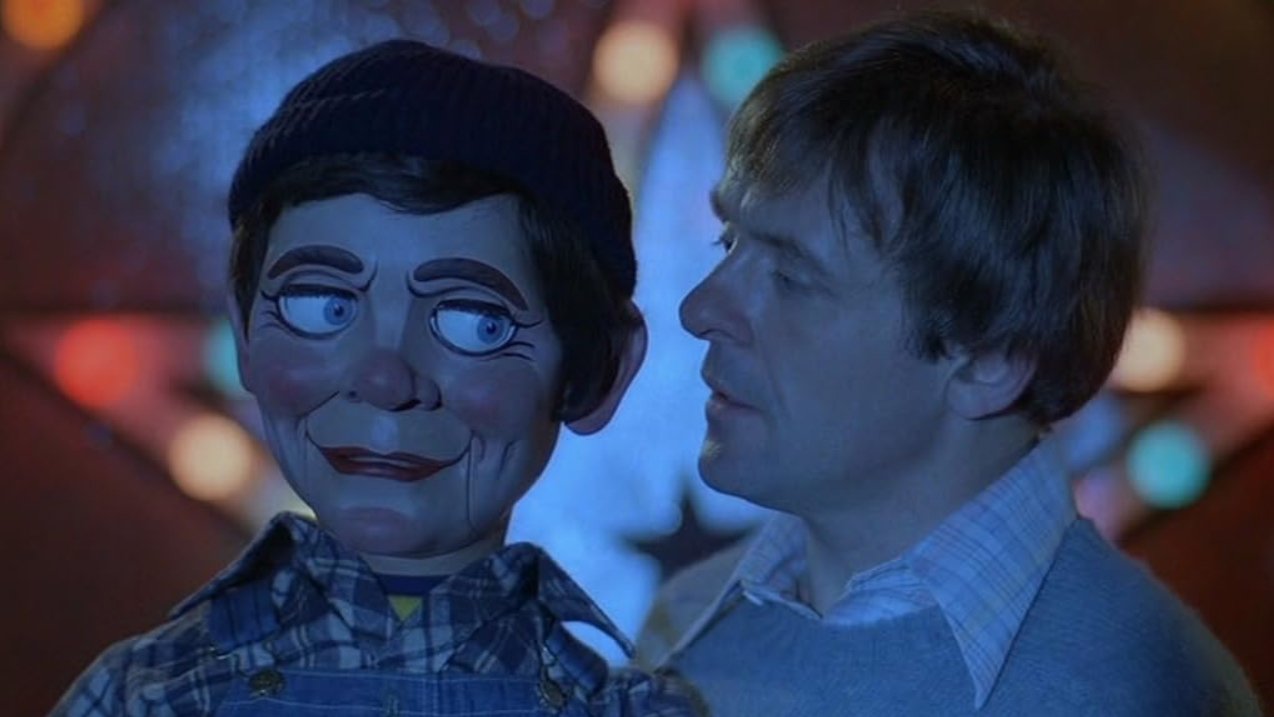
image: 20th Century Fox
Director: Richard Attenborough
Writer: William Goldman
Cast: Anthony Hopkins, Ann-Margret, Burgess Meredith, Ed Lauter, E.J André, David Ogden Stiers, Jerry Houser, Lillian Randolph
Run Time: 1h 47m
UK Rating: 15
8/10
Every ventriloquist dummy is creepy, there's something unnatural about their dead glass eyes and stilted movements. This automatically extends to the person operating the puppet, who's content to be pushed into the background by a block of wood. It's a truism that goes back to the inception of the art. Perhaps because the earliest known practitioners including Eurycles of Athens used it to deceive people into believing prophecies or faking paranormal ability long before it became a popular vaudeville novelty. So killer dummies was a narrative inevitability that has appeared countless times but perhaps it’s best exemplified in Richard Attenborough’s Magic.
We first see skilled magician Corky (Anthony Hopkins) retelling his dying mentor Merlin (E.J. André) about his failure on stage. Awkward and lacking any stage presence he’s unable to hold the audience's attention long enough to perform the tricks and reacts furiously when things go wrong. Merlin has faith in his protege though and advises him to find a gimmick to distract from his nervousness. Corky begins performing with Fats (also Hopkins), a ribald ventriloquist dummy who entertains the audience and rejuvenates the magician’s act. His new show draws the attention of veteran agent Ben Greene (Burgess Meredith) who sees a bright future for the pair. The only issue is that Greene wants Corky to undergo a medical evaluation before he can begin filming his own television show. Despite this being explained as routine but mandatory, Corky refuses the examination on principle, protesting its invasiveness. What Corky is really worried about though, is that it will expose his mental health issues. Not just improving his act, the foul mouthed Fats has also been talking to his puppeteer and telling him what to do. So the magician and his dummy flees to a faded lakeside resort near to where he grew up and runs into his high school crush Peggy (Ann-Margret) who now runs the empty attraction. With Fats’ help the pair rekindle their relationship in the absence of Peggy’s abusive husband Duke (Ed Lauter) but things spiral out of control when Greene comes looking for his client and discovers the murderous hold that Fats exerts over Corky.
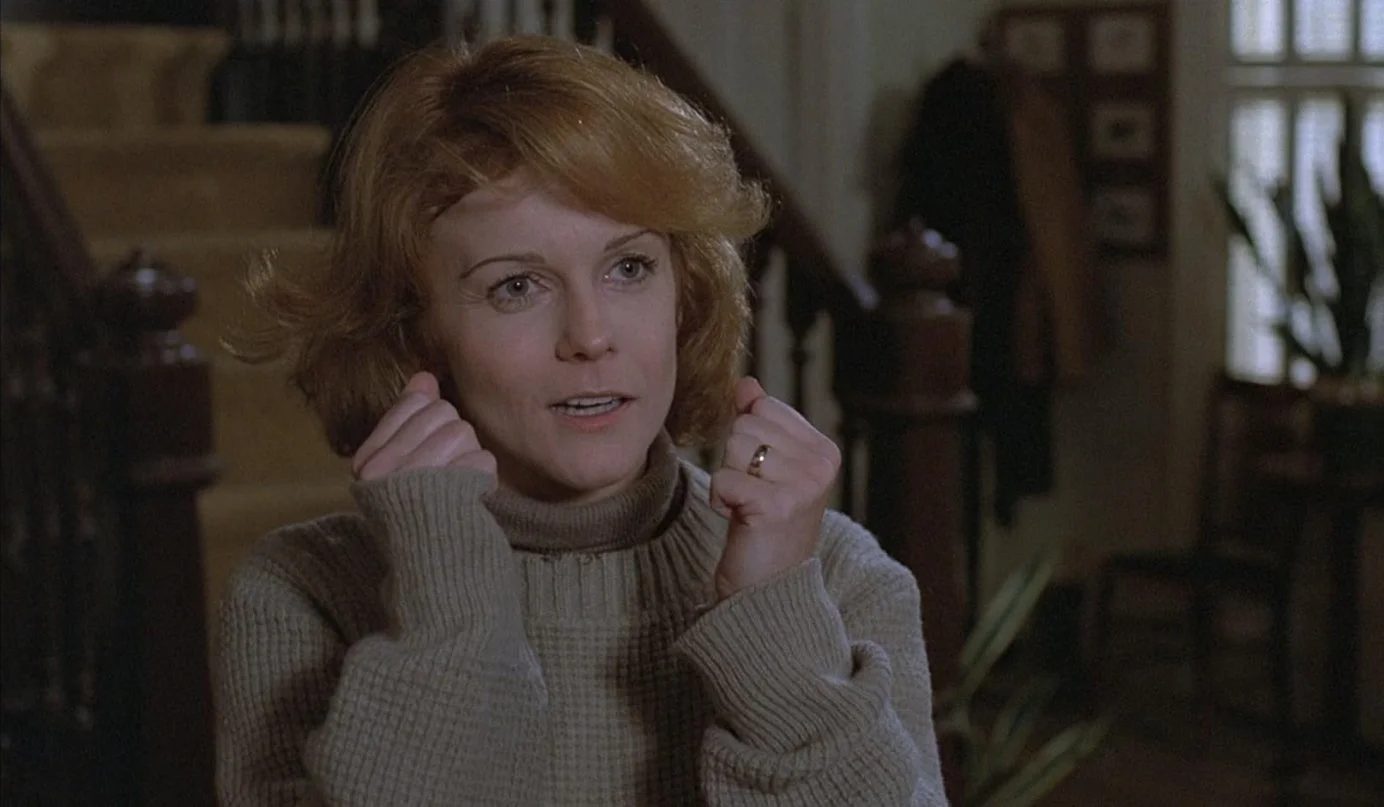
image: 20th Century Fox
Hopkins has said in interviews that he should never have done Magic and they should have hired an American (he suggested Pacino) to play the role rather than a Welshman. I disagree, Magic is probably my favourite Hopkins role and though his American accent isn’t great it's still an incredible performance. The actor studied with Dennis Alwood to be able to perform the ventriloquism that the role required and did further training with two magicians in order to perform the sleight of hand. He's excellent, better than some professionals that I could name in either discipline, it appears effortless as if Corky has put in the work to become a master at his art. The brash, obnoxious voice of Fats is different enough from Corky’s that when the characters talk it feels like a conversation rather than a man talking to himself (which is what it is). The dummy is the ventriloquist’s id, able to charm Peggy until Corky is ingratiated enough on his own to be himself. Though he’s still not free of his temper and the demands he places on himself and others. Peggy is beautifully played by Ann-Margret, she’s a tragic figure lost in a life she seems to have fallen into. An empty resort she’s inherited and a husband angry at his own failed ambitions. Corky to her represents escape and glamour, he left their town for New York and seems to be on the verge of stardom. She’s willing to overlook his issues if he’ll follow through on his promise that he’ll take her away. Fantastic too is Burgess Meredith who plays Greene as a cigar chomping old pro who has seen it all, not at all shocked by his client’s relationship with his dummy as if it’s par for the course.
Magic’s script by William Goldman is based upon his own book of the same name from 1976, although it ditches the book’s non-linear narrative and the details of Corky’s childhood. Instead his early years are glimpsed as fleeting memories as he heads to the Catskills, a lonely, unsociable boy content to practice his magic tricks alone. The script is sharp and funny (especially Greene), giving each of the characters depth and motivation. The writer bristled at the inevitable comparison to other ventriloquist films such as The Great Gabbo (1929) and Michael Redgrave’s segment of the anthology Dead of Night (1945) but Magic marks itself out in how it explores the relationship between the person, doll and those around them. Corky is a fully realised character, you understand why he needs to hide behind Fats even as the dummy sabotages his life. There’s a volatile cocktail of ambition, fear and rage governing Corky which is all channelled into the inanimate doll.
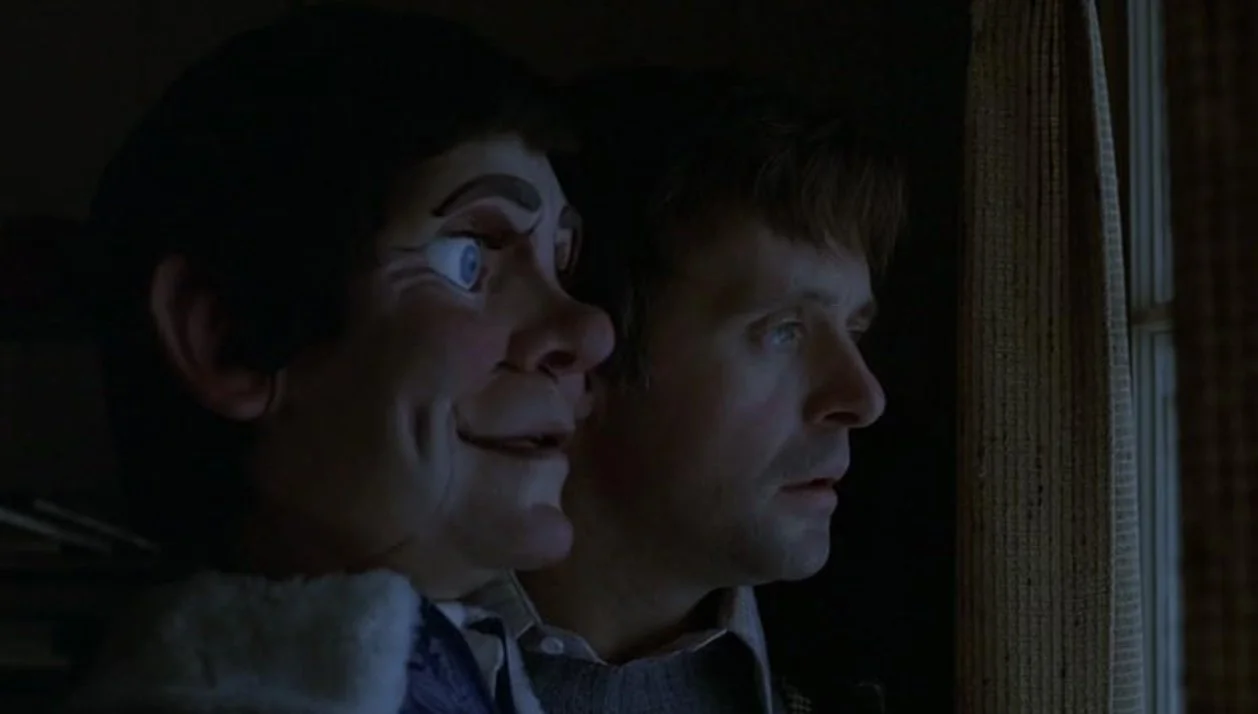
image: 20th Century Fox
Richard Attenborough here is unshowy in his direction and being an actor himself focuses instead on character and performance, letting the scenes play out patiently. The middle act where we begin to see an escape for both Corky and Peggy is allowed to linger with long tracking takes, as if no one wants to break the spell and return to the drudgery of their lives. This unhurried pace is best displayed in which Corky is asked to put Fats away for five minutes. It plays out in excruciating real time with the ventriloquist getting increasingly uncomfortable the longer that he’s separated from his dummy. Magic is surprisingly pretty, especially in the location shooting that twins Victor J. Kemper’s cinematography with Jerry Goldsmith’s sumptuous score. There’s a detachment though, especially the clinical, cold horror which never builds any tension. It’s clear that Attenborough is more interested in the psychological element, treating Corky with too much empathy and pity for him to appear ruthless or threatening. He’s as much a victim of Fats as anyone else and appears to be just as shocked as everyone else by his actions.
Magic feels shockingly cosy for what could have been quite a gruesome film. Largely down to Hopkins’ subtle, nuanced performance and Attenborough’s sedate directing, it patiently amps up the drama and without resorting to cheap scares and instead focuses on the relationships between the Peggy and Corky who each feel disconnected from wider society. There’s obvious comparisons to be made to other murderous doll films but I feel the film most feels like Hitchcock’s Psycho (1960) in structure and intent, both films trying to paint a more complex view of a killer that doesn’t feel wholly responsible for their actions. It was announced in May 2026 that Sam Raimi would be directing a “modern retelling” of Magic’s story with a script by Mark Swift and Damian Shannon who wrote Raimi’s Send Help (2025). Although it’s difficult to see how another interpretation could better the film, it's an interesting prospect though especially with a director known for more schlocky fare.
Watched on DVD
Published 13th October 2026