
Review
The In-Laws (1979)
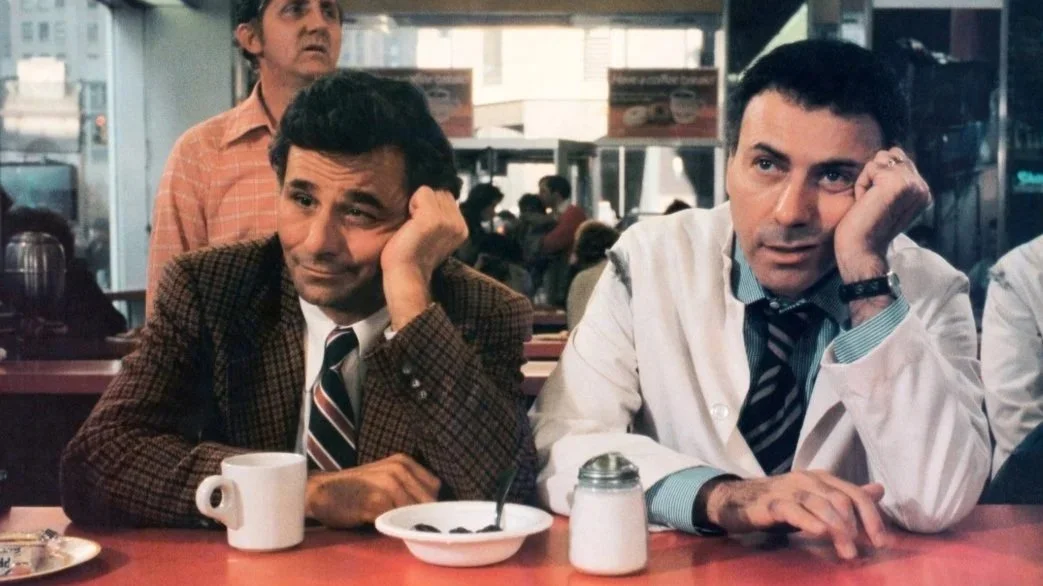
image: Warner Bros. Pictures
Director: Arthur Hiller
Writer: Andrew Bergman
Cast: Alan Arkin, Peter Falk
Run Time: 1h 43m
UK Certificate: PG
10/10
The In Laws is probably my favourite comedy and one that makes me laugh until I’m struggling to catch my breath. There’s few films that achieve more mileage from a single word and even out of context “Serpentine” will still bring a smile to my face. Yet it seems like a well kept secret despite how ardent fans of the film tend to be. Researching this write up I didn’t find it on most of the Top 100 comedy lists which genuinely shocked me. It is consistently hysterical with a broad range of jokes that run the gamut between satire to slapstick and a much higher hit rate than most other comedy films from the same time period.
The In Laws begins with the meeting of Sheldon Kornpett (Alan Arkin) and Vince Ricardo (Peter Falk), opposing personalities brought together because of the impending marriage of their children. Ricardo uses this meeting to stash stolen US Mint Plates at his new in laws family home, dragging the nervous, nebbish Kornpett into an international conspiracy to devalue the US dollar. It’s a premise that earlier in the decade would have served as the jumping off point for a paranoid, cynical thriller, here however it is the foundation for one of the best comedies ever made.
“Please, God. Don't let me die on West 31st Street”
The In Laws sneaks up on you, the drama escalates so logically and gradually that we’re never given an opportunity to take stock and consider how the protagonists got into this situation to begin with. It all builds beautifully, moving from set pieces whilst still allowing room for comedy and moments of character development. Its breathless pace is accelerated by Peter Falk’s Vince Ricardo a man claiming to be a CIA agent. This is muddied by the fact he seems to lie reflexively, spinning stories about Tsetse flies stealing babies immediately upon meeting the parents of his sons fiancée. He’s charming and affable, straight faced and sincere as he concocts a seemingly endless list of fabrications. Sheldon’s (Arkin) incredulity grounds the film in reality. Sheldon is never sure of where the truth lies and by the end of the film he gives up and simply goes along with everything he’s told understanding that it makes very little difference to his survival. Ricardo is his only means of getting home safe and it doesn’t matter that he’s the reason he’s in danger to begin with.
The audience and Sheldon will remain on the back foot until the very end of the film regarding Ricardo’s allegiances, motives and even his very sanity. All of which is played expertly by Falk, he dominates the film with a simple effervescent self assuredness. Despite all evidence to the contrary the viewer can’t help but be won over by everything he says. It’s easy to understand anyone being swept up in his schemes, his persuasiveness seeming like verbal slight of hand. Nothing seems to phase Ricardo and as the danger mounts he remains blasé, shepherding Sheldon through gun battles like a parent guides a toddler to bed.
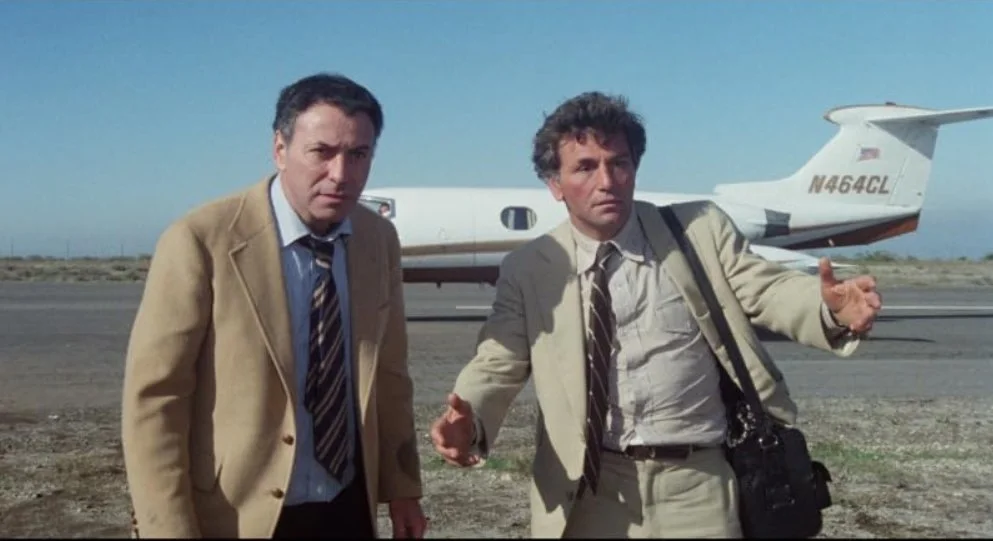
image: Warner Bros. Pictures
The script is faultless, literally tailor made for Arkin and Falk by the writer (Andrew Bergman) after he was asked by Warner Bros to write something for the two actors who wanted to work together. Bergman had previously worked with Arkin on Freebie and the Bean (1974), a mess of a film in which the two stars (Arkin and James Caan) largely dispensed with the script and what was originally planned as a drama descended into farce. Critics savaged the film on release (it was still a financial success) but the film’s buddy cop formula would prove to be an influence on The In Laws. The chemistry between Falk and Arkin is the foundation of The In Laws with every other element being largely superfluous against their character’s dynamics. Bergman said he was initially surprised that the pair hadn’t already collaborated considering how wonderfully their sensibilities complimented each other. The interplay between the stars feels like the basis for every buddy movie that followed as the genre became more popular in the following decade. These high concept movies that would dominate the 1980s and would make celebrities of their stars used the dynamics of opposites thrown together in high octane situations but largely dispense with the comedy that always remains at the forefront of The In Laws.
Given the nature of its inception, it’s a film that could have easily exerted little effort to the plot but Bergman ensured it remained logically consistent even if he largely kept the narrative in the background. There’s a thread of satire that run through the film from Ricardo’s involvement in the Bay of Pigs (“To Vince. Well at least we tried. Thanks for everything - John F. Kennedy”) to the CIA’s incessant meddling in South America (notice the sign for United Fruit Boulevard). Even the airport assassination of Ricardo’s contact which leads to one of the film’s funniest moments has echoes of the murder of Senator Leo Ryan a precursor to massacre at Jonestown. The In Laws doesn’t succumb to the grim fatalism prevalent in films from the decade, instead it’s joyous and largely family friendly save for a discussion about the subject of the flag of Tijata and the victims of the film’s largely non violent action sequences. The film, like Ricardo himself is relentlessly optimistic and never opts to be cruel or crude choosing instead to reward the characters (and audience) with an uncomplicated happy ending.
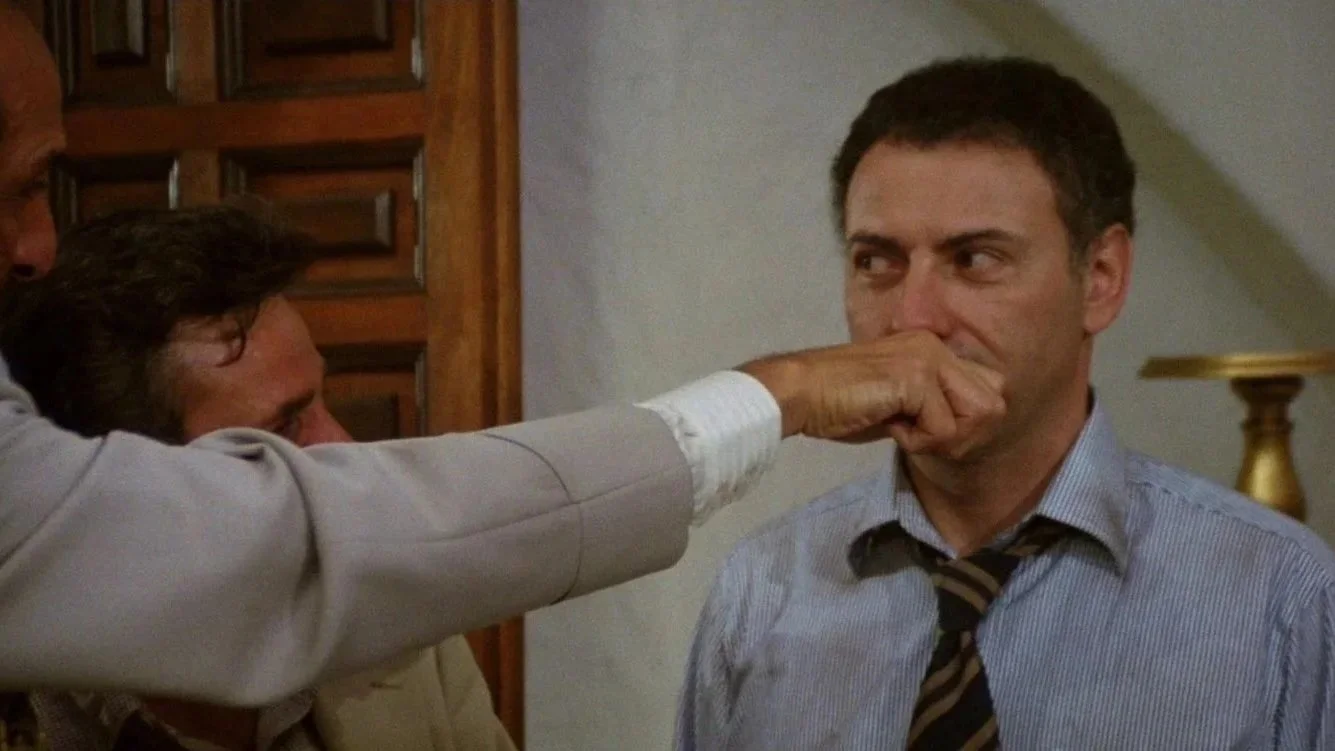
image: Warner Bros. Pictures
Arthur Hiller’s direction is mainly concerned with providing understated, subtle framing to the actors but shines during the more action heavy second half of the film. Hiller was a versatile veteran by the late 1970’s having helmed such varied releases as Love Story and The Hospital but this is easily his greatest accomplishment. He seems reverential to the script understanding the strength of the dialogue and inherent appeal of the actors and still it is not without flair, the initial heist is dynamic with a long tracking shot over the opening credits and later with a suitably chaotic car chase. Hiller worked out the choreography and camera work for the pursuit with toy cars and it’s surprisingly agile and ingenious, the action being downplayed by Ricardo’s discussion of a chicken sandwich as a hidden stunt driver steers the vehicle from the boot of the car. It would have been an easy film to get wrong, there’s countless comedies that lose track of the narrative or play up the comedy until it descends into an unfunny farce but Hiller knows which moments need restraint and where to let the film off the leash.
The film was a success, especially considering the more modest returns usually expected from comedies, it made $38 million from it’s $9 million budget. The reviews at the time were mixed with some critics lauding its invention and charm and others dismissing it entirely as a “smugly cynical farce” (Washington Post) but it is a film with an ardent fan base (even the CIA showed it to new recruits). Most of the creative team minus Hiller would reunite for 1986’s Big Trouble, I haven’t seen the film but everyone involved seems to regret their involvement. Andrew Bergman (who was credited for anonymity as Warren Bogle) saying it was a “mess” and Cassavetes (who took over directing duties from Bergman) saying simply that it was aptly named. There was also a remake of The In Laws in 2003 with Michael Douglas and Albert Brooks that is largely forgotten despite a fairly decent cast.
Best viewed today on the Criterion Collection’s (expectedly) excellent Blu-ray, it is presented with a sublime 2k digital restoration that looks crisp and clean and comes with a smattering of extras including an archival commentary with Falk, Arkin, Hiller and Bergman and a retrospective documentary.
Watched on Criterion Collection Blu-ray.
Published 9th July 2026