
Review
The Last Detail (1973)
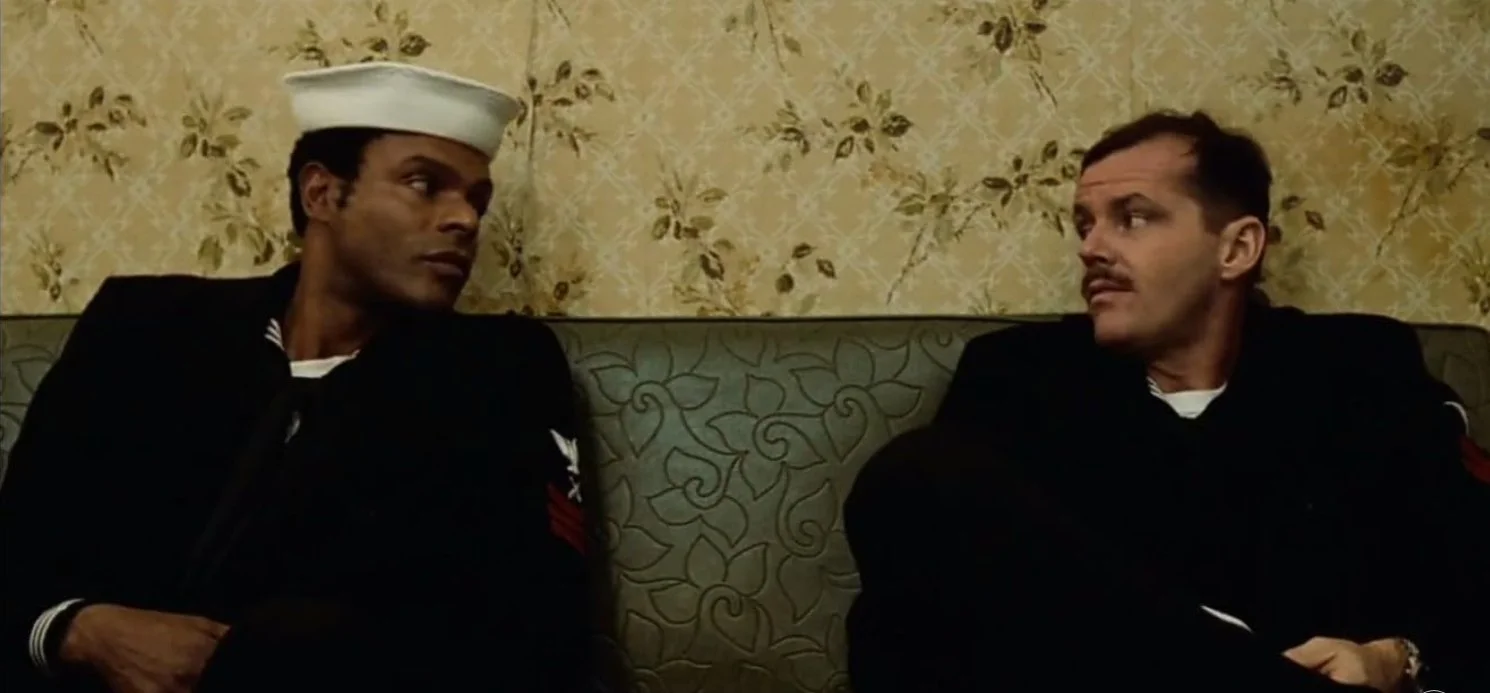
image: Columbia Pictures
Director: Hal Ashby
Writer: Robert Towne
Cast: Jack Nicolson, Otis Young, Randy Quaid, Clifton James, Carol Kane, Michael Moriarty, Nancy Allen
Run Time: 1h 44m
UK Rating: 18
9/10
The Last Detail looks like it was an absolutely miserable production. Every scene of the cast out on location has them shivering in the bitter winter cold, breath hanging in the air as they say their lines. The Navy uniforms seemingly doing nothing to protect the actors from the elements. It’s a road trip in which every location on the way looks dour and anonymous, only distinguished by the character's increasingly desperate antics on the way. The indistinct towns they pass through add to the sense of pervasive pointlessness that runs through the film. Despite how apolitical the characters claim to be, The Last Detail is the perfect encapsulation of the nihilistic sentiment that ran through American society in the 1970s.
Signalman First Class Billy “Badass” Buddusky (Jack Nicholson) and Gunner’s Mate First Class Richard “Mule” Mulhall (Otis Young) are Navy lifers awaiting their draft orders. Stuck in limbo, both men are listless and when they are tasked with transporting Seaman Larry Meadows (Randy Quaid) to Naval Prison, Buddusky dismisses their assignment as a “shit detail” (a recurring description). Meadows is an eighteen year old who has been given eight years in the brig and a dishonourable discharge for attempting to steal $40 from a charity box incurring the wrath of his base commander. They quickly realise the week that they’ve been given is more than enough time to escort the young prisoner and they can exploit their per diems to turn a profit. This plan changes when Buddusky and Mulhall discover the unjust severity of Meadows’ sentence. This turns the detail from simple escort into a debauched road trip in which the pair endeavour to show the young sailor a good time before his sentence begins.
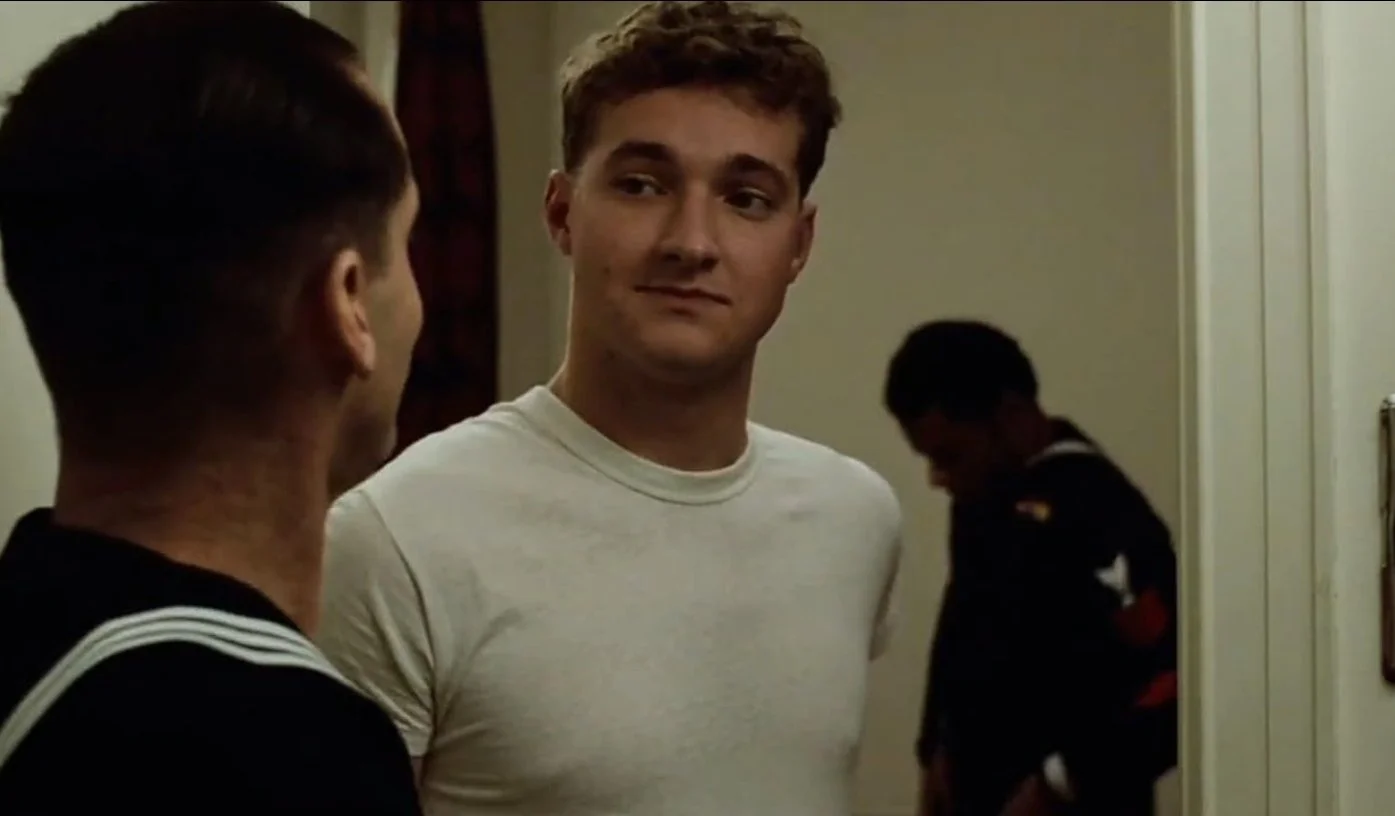
image: Columbia Pictures
Jack Nicholson may be the actor whose roles best define the seventies. A decade in which studio producers took bold chances with new talent and released gritty dramas with morally ambiguous protagonists. Nicholson's charm mixed with his irascible, unfocused defiance captured the zeitgeist with natural ease. In The Last Detail his character, Buddusky mostly presents an aura of insouciance but is also governed by a rigid sense of honour. Throughout the film he genuinely tries to give Meadows a good send off, his care of the younger man at times seeming paternalistic. When things don’t go to plan, whether it’s unmelted cheese on a burger or a barman refusing to serve them the frustration can quickly turn to rage. Nicholson is a master of the subtle emotions that his characters do their best to conceal or a depth that they themselves might be unaware of. Buddusky’s need to keep the party going is driven by a refusal to return to drudgery, Otis Young’s Mulhall in contrast would prefer to keep his head down, disengaging from anything unpleasant or upsetting. Keeping himself in the background of some scenes and when questioned about the divisive politics of the era he remains tight lipped. When coaxed or prompted though he’s more than willing to aid Buddusky’s antics, though he’s more committed to seeing the mission through.
Both of them feel deep sympathy for Meadows, who they rightly feel has been unfairly convicted. His attempted theft seems paltry and as we see throughout the film Meadows appears to be a kleptomaniac, stealing just because the opportunity presents itself. Despite his size Meadows is almost infantile in his inexperience, with Randy Quaid playing him with an endearing naïveté. His inexperience is a tragedy that is never played for laughs, an allusion to the other young men enlisted to die in the Vietnam war without being given an opportunity to live. The rest of the cast are transient figures within the film, appearing briefly before our characters continue on their journey. Carol Kane features in an early role when the trio visit a “cathouse”. She’s depressingly young but world weary and jaded, especially in comparison to the inexperienced Meadows. The film also marked the debuts of Nancy Allen and Gilda Radner who appear in brief scenes, alongside cameos by cinematographer Michael Chapman as a taxi driver (he’d later work on Scorsese film of the same name) and director Hal Ashby as a bar patron.
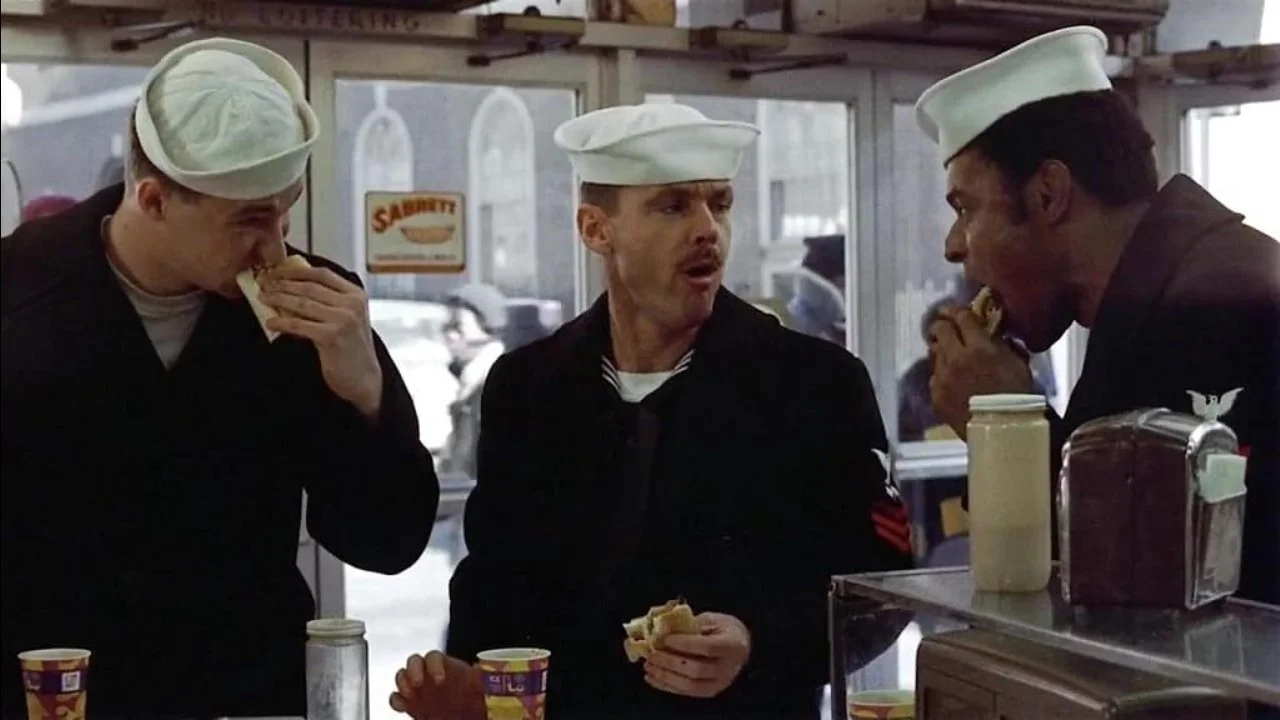
image: Columbia Pictures
Despite the film being the characters on a road trip together, desperate to give some pleasant memories to focus on in the brig the film is aggressively grey. They’re mostly in grim, utilitarian public spaces or outside being dwarfed by the huge building around them. The cafes look dingy and the hotels like roach traps but that seems to be where they’re at home. When they’re presented with what looks like a fine dining establishment they bemoan the lack of a booth. They know that they wouldn’t fit in or be comfortable in this environment. The film is shot primarily using close ups, in narrow cramped spaces. The audience rides alongside them on trains and sits next to the characters in booths, Ashby skillfully places the viewer as a participant on the journey. So while the film is incredibly funny (Buddusky and Mulhall’s attempts to set up camp beds being a highlight) the final destination is always looming ahead. Robert Towne’s script based on a novel by Darryl Ponicsan ran afoul of studio sensors before production because of the number of expletives but Towne refused to back down, "This is the way people talk when they're powerless to act; they bitch” he told the head of Columbia Pictures. Beyond the colourful language though the script is nuanced and subtle, saying more by having the characters avoid topics than by addressing them openly. These are not characters who will expressively talk about their feelings but the script deftly alludes to the inner workings of the characters. Like a lot of films of the 1970s the narrative is concerned with masculine identity but the film manages to sensitively and accurately capture the baffling aspects of male friendships.
The Last Detail was stalled for years between disagreements over scripts, casting, director and scheduling conflicts but the finished product feels perfectly of its time. It captures the spirit of the era and feel of a country riven with turmoil and struggling with its sense of national identity. Towne’s script manages to convey all of this by somehow never addressing these issues head on and simply telling the story of enlisted men trying to do what they see as the right thing. It’s a one of those rare occasions in which the writer, director and stars feel perfectly attuned to the sensibilities of the material and it’s a great film from one of cinemas greatest eras.
Watched on Indicator Blu-ray
Published 16th September 2026