
Review
Targets (1968)
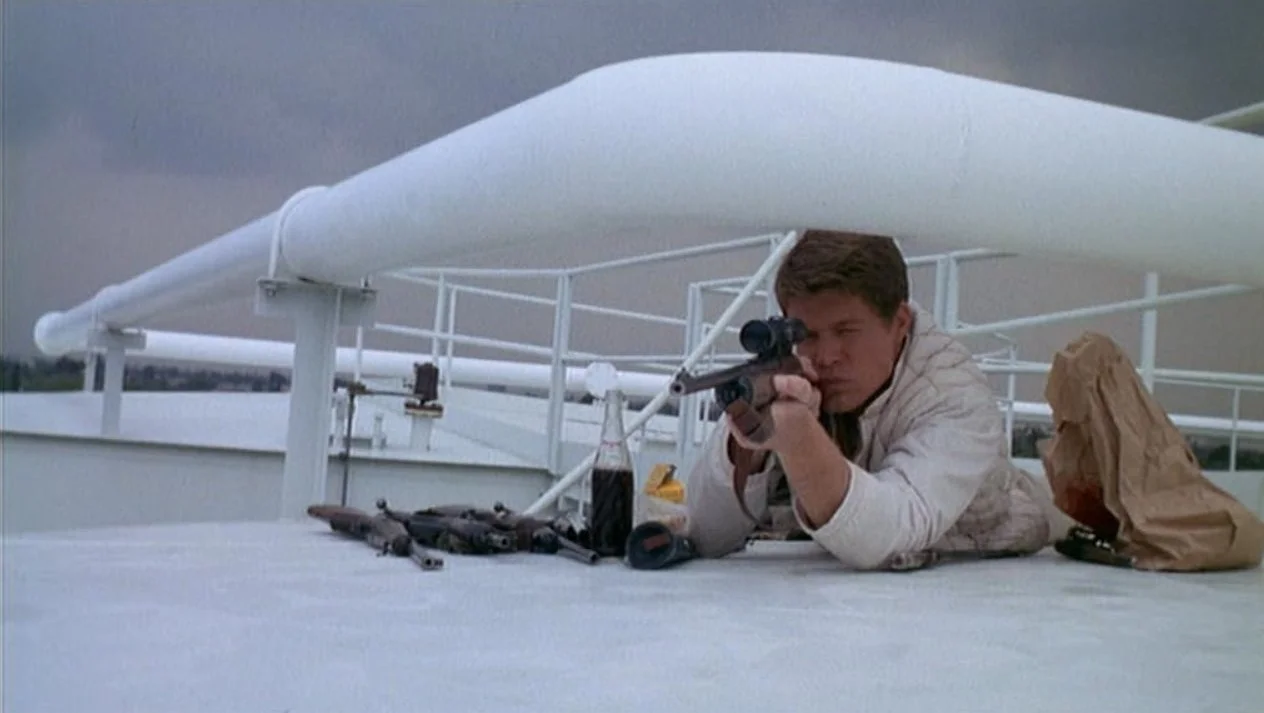
image: Paramount Pictures
Director: Peter Bogdanovich
Writer: Peter Bogdanovich
Cast: Tim O’Kelly, Boris Karloff, Nancy Hsueh, Peter Bogdanovich, Sandy Baron, Tanya Morgan, James Brown
Run Time: 1h 30m
UK Rating: 18
7/10
Targets is a film in which the bizarre production ends up being more compelling than the film itself. Bogdanovich’s debut blends then recent real life headlines with a metatextual critique of the movie industry and how it treats its ageing stars. However, the two narratives feel retrofitted together rather than ever feeling narratively cohesive. In the film’s best moments, Targets is compelling and its stark, chilling depictions of violence are deeply upsetting.
The film follows two parallel stories, one concerning Byron Orlok (Boris Karloff), a fictionalised version of Karloff who happens to have starred in the same films. Orlok (the name a nod to Nosferatu) is an actor who feels like a relic, unhappy with the schlocky horrors he’s making for a Roger Corman-esque producer. He says that the real life bloody atrocities that dominate newspaper headlines have made his Victorian villains seem quaint and harmless in comparison. The studio’s writer Sammy (Peter Bogdanovich) and Orlok’s assistant Jenny (Nancy Hsueh) disagree, with Sammy trying to get the actor to commit to his new script which the writer feels has genuine merit. Orlok intends to retire, his last appearance being his scheduled appearance at a drive-in theatre to promote his last movie and give a dignified farewell to his career. The second interspersed story focuses on Bobby Thompson (Tim O’Kelly) a young man who we first see in a gunshop testing the scope of his new rifle on Byron Orlok who’s standing outside on the street opposite. Despite this he’s outwardly normal, cheery and affable, having a close relationship with his wife Ilene (Tanya Morgan) and parents (James Brown and Mary Jackson). But inside he’s driven by a compulsive, murderous desire and has secretly been stockpiling an alarming amount of weapons in the back of his car. He begins a killing spree that seems destined to bring the two separate narratives together with tragic consequences.
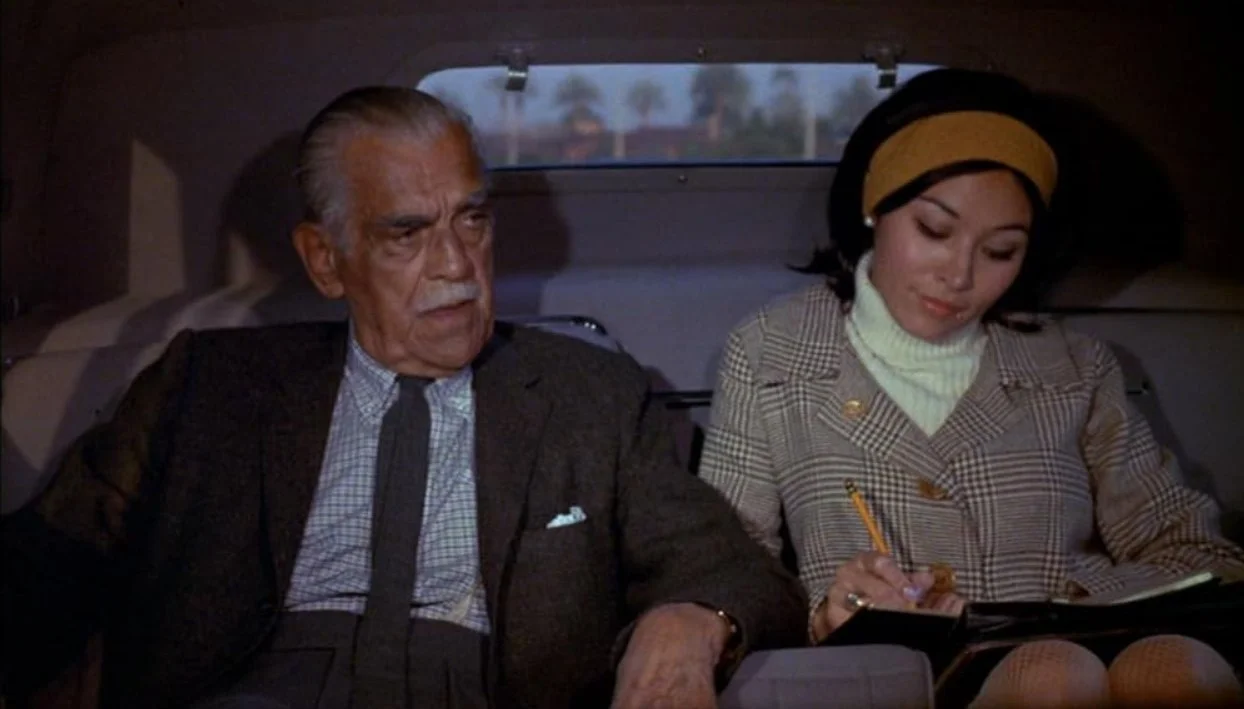
image: Paramount Pictures
It’s impossible to discuss Targets without mentioning Charles Whitman, who is the clear inspiration for Bobby Thompson. Whitman, a US Marine who after killing his family began a massacre that culminated in him firing a rifle from a tower situated on the Campus of the University of Texas murdering seventeen people in total before being killed by the police. Whitman suffered from debilitating headaches and requested that his brain be studied after his death to explain his murderous impulses. Upon examination coroners discovered a tumour pressing against his amygdala which some doctors have offered as the cause of the tragedy (though this is debated). Targets offers the audience no such explanation, the film isn’t interested in an examination of causes. It positions Thompson as something that’s rotten at the heart of the American Dream, a brutal symbol for a decade in which the American public were subject to never ending displays of senseless violence. From the assassination of high profile figures (Targets was released shortly after the deaths of Martin Luther King Jr. and Robert F. Kennedy) and the media coverage of the Vietnam war.
Tim O’Kelly’s Thompson is coldly terrifying throughout, the banality of his everyday interactions shocking when viewed against the ruthless efficiency of his violence. Even the moments of domestic calm between his family are plagued by tension, knowing what lurks in Thompson’s car. The star of the film however is undoubtedly Karloff, giving one of the finest performances of his extensive career. Plagued by poor health and mobility issues the star rested between takes requiring an oxygen tank aided by a wheel chair. On screen he’s magnetic, especially during his recitation of W. Somerset Maugham’s retelling of the Mesopotamian folktale Appointment in Samarra (1933) where his charisma and gravitas seem effortless. It’s a shame his section of the film is populated by some distractingly poor performances, particularly by Bogdanovich himself whose delivery is best described as amateurish.
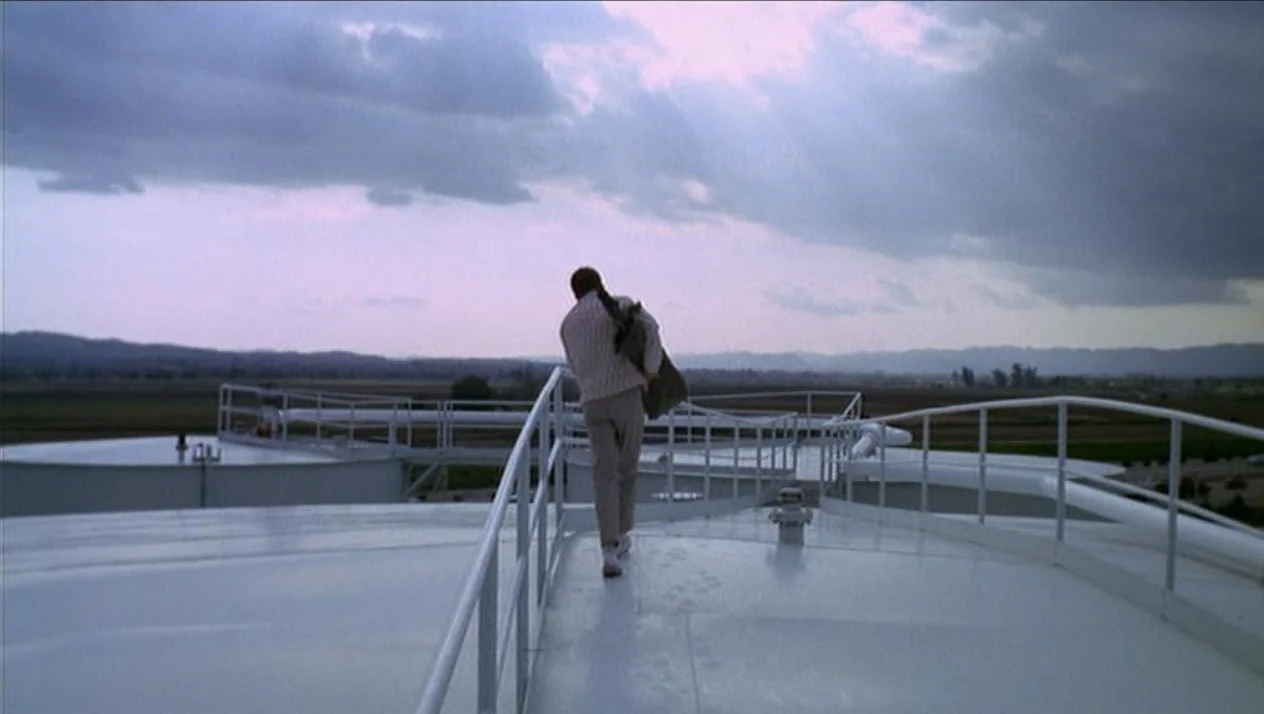
image: Paramount Pictures
Targets begins with a viewing of Roger Corman’s The Terror (1963), a film everyone involved in the making of realised was terrible. Like most of Corman’s films it was assembled from whatever disparate elements the director had available at that moment. The initial shoot was cobbled together with a hastily written script and sets left over from The Raven (also 1963) the resulting film is an unmitigated mess that took five directors (including Monte Hellman and Francis Ford Coppola) to finish. It was this footage and the discovery of the fact that Karloff owed Corman two days' work that prompted him to contact Bogdanovich (who had done script work for Corman) and offer to finance his debut film if he could work in these assets. Bogdanovich and Polly Platt (his then wife) watched the footage from The Terror and concluded it was terrible resulting in Orlok’s dismissive review that we see at the start of the film. Their idea to use this in a postmodern critique of the movie industry is genuinely inspired, blurring the boundaries of fact and fiction. Bogdanovich says that Sam Fuller helped massively with the film’s structure and story but refused to take any credit, although Bogdanovich named the character he plays in Targets after Fuller in tribute. The deliberately murky reality is reinforced by the scenes of Thompson’s rampage which are harrowing in their depiction of random and indiscriminate murder.
There’s no score to the film (aside from music appearing diegetically) which gives the sense you’re watching a documentary, especially during a scene where Thompson shoots at passing cars on the freeway. This sequence is frighteningly similar to the famous, grainy Zapruder footage of the JFK assassination. There’s visceral horror too in the film’s inevitable bloody conclusion, which even on the clearly meagre budget is brutal in its stark, guerilla realism. All of this is shot beautifully by László Kovács who with the help of Polly Platt’s ingeniously frugal production design made the threadbare sets seem more believable. Where the cinematography shines is in the outdoor photography and I was pleasantly surprised by how sumptuous the transfer in the BFI Blu-ray looked.
Despite its poor box office performance, Targets impressed Paramount enough to secure Bogdanovich a lucrative seven picture contract with the studio. His next film would be his faultless adaptation of Larry McMurtry’s novel The Last Picture Show (1971) which was released to critical acclaim and a receptive audience. His debut feature is hampered by the silly stipulations and budgetary restrictions of the production but the director's raw talent is clearly evident in his tender and empathetic work with Karloff. This respect for actors and the legacy of classic Hollywood was something that served Bogdanovich well and would ingratiate him into the inner circle of cinematic auteurs. The film is definitely worth watching though, especially the BFI Blu-ray which is packed with interesting special features which detail the chaotic production and the life and career of Boris Karloff.
Watched on BFI Blu-ray
Published 3rd September 2026