
Review
The Art of Self-Defense (2019)
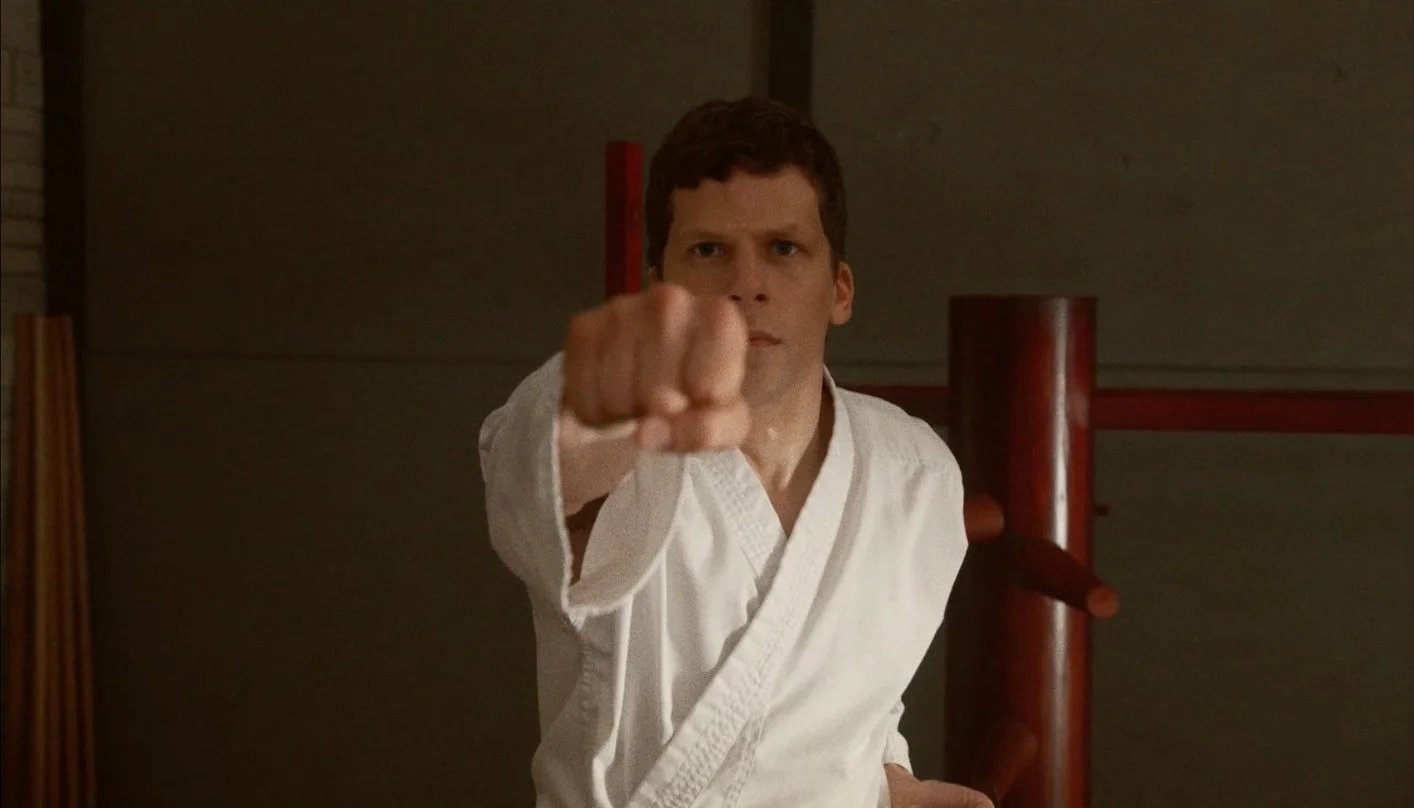
image: Bleecker Street
Director: Riley Stearns
Writer: Riley Stearns
Cast: Jesse Eisenberg, Alessandro Nivola, Imogen Poots, Phillip Andre Botello, David Zellner, Steve Terada, Davey Johnson
Run Time: 1h 44m
UK Rating: 15
9/10
There’s something inherently ridiculous and silly about all these self appointed “alpha males”. The laughable posturing is easy to mock but also dismissing entirely is incredibly dangerous. Too many young men are being drawn into a damaging culture of misogyny and toxic masculinity that shifts blame for personal issues to external factors (usually women) and fosters a community of similarly disaffected and isolated young men. Riley Stearns’ The Art of Self-Defense brilliance is in how scathingly it mocks this culture whilst never shying away from how malignant and poisonous it truly is.
Jesse Eisenberg plays Casey Davies, an accountant who lives an incredibly solitary existence, his only companion being his loyal Dachshund. At work he’s excluded in the break room from his chauvinistic colleagues and longs to be part of their clique. When he goes out to buy dog food late at night, he’s violently mugged and left for dead. Already feeling emasculated, the brutal attack hospitalises him and when Casey returns home he’s terrified of going back outside. In an attempt to claw back some self confidence he goes to purchase a handgun but during the waiting period he is enticed into a karate dojo. Inside he’s enamoured by the Sensei (Alessandro Nivola) and quickly signs up to classes. Casey finds meaning and community in the dojo’s rigid rules and structure and his dedication impresses the Sensei. Allowing himself to be moulded by the Sensei, Casey becomes much more assertive and confident. But when the children’s karate instructor Anna (Imogen Poots) is passed over for promotion to black belt, he realises that there’s something sinister at the heart of the dojo’s hyper masculine ethos.
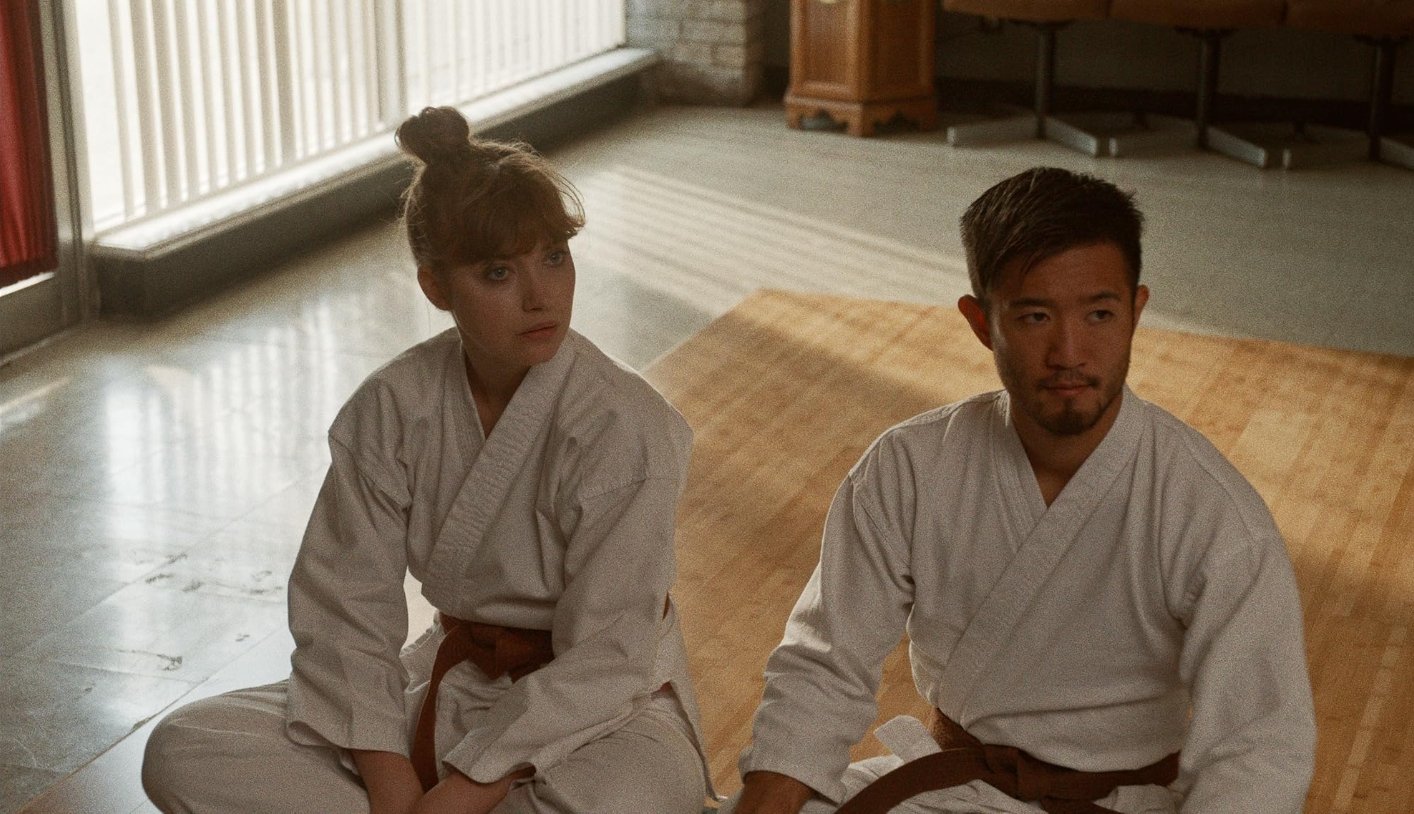
image: Bleecker Street
Riley Stearns’ debut feature film Faults (2014) was a film about attempting to deprogram a member of a cult. Uncomfortable, unsettling and darkly comic it unfortunately didn’t reach the audience it deserved. The Art of Self-Defense is almost a companion piece in how it explores the lure and danger of charismatic leaders and groupthink. The karate dojo is undoubtedly a cult. The participants eagerly adhere to the hierarchy of belts and absorb the Sensei’s aphorisms as if they’re sacred texts (“If a bear's forest catches on fire, the bear is still a bear”). Alessandro Nivola gives an utterly convincing performance as the Svengali like Sensei, ruling the dojo with quiet menace and a suggestion of violence should the students disobey his rules.
Jesse Eisenberg meanwhile gives a faultless performance with every facet of his performance carefully observed. He spends the first act of the film appearing ill at ease in his own skin, a spectre haunting his office and home. It is only when at the dojo that he seems comfortable in himself, finding kinship with his fellow learners and relishing the connection of the sparring. Casey does need to change, even before the attack he lives in almost perpetual fear but the Sensei’s domineering, coercive influence is not a positive transformation. His hobbies aren’t masculine enough so he’s commanded to only listen to metal (“the toughest music there is”) and ditch his interest in France for the more acceptable German. Sensei also dismisses Imogen Poots’ Anna, despite her obvious Karate proficiency and unwavering commitment, in his eyes her gender makes her naturally inferior. Poots is incredible in her singular focus, competing in the intensely sexist environment the Sensei has fostered. She's unwilling to show any vulnerability but can’t help but be protective of Casey.
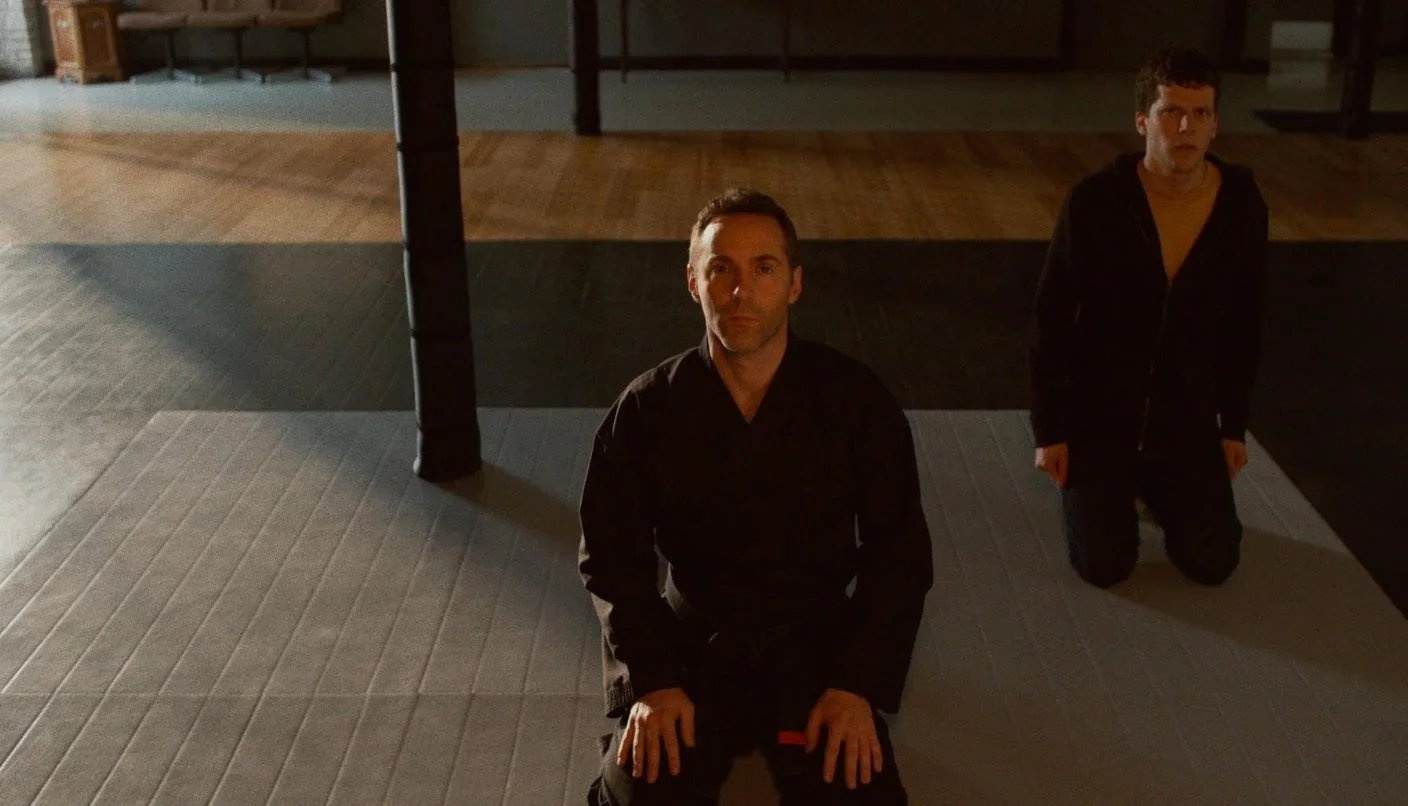
image: Bleecker Street
There’s a mannered absurdism in The Art of Self-Defense’s dialogue that fosters a disconnect between the characters. An early interaction between Casey and a gun shop owner who’s every line of dialogue sounds like a condemnation of America’s obsession with the second amendment is hilarious. The script by director Riley Stearns is full of ridiculous, preposterous statements delivered straight faced and with complete sincerity. It’s a deliberate artifice that extends to props with even the food that Casey buys for his beloved dachshund being labelled “Dog Food” in a plain brown bag. There’s a measured drabness to the world in which the film is set, the only vibrant colours seemingly reserved for the Karate belts. Like with his debut Faults (2014) Stearns and cinematographer Michael Ragen make each environment feel claustrophobic, even the dojo it’s the character’s close proximity that is emphasised until it becomes stifling. The sparring always seems set to erupt into barbaric chaos and when it does the violence is shockingly savage. There’s an obvious comparison to David Fincher’s Fight Club (1999) with disaffected men asserting themselves in primitive brutality but I think that Stearns is conscious of not accidentally glorifying that mentality. Think of the Manosphere and alt right viewers who unironically consider Tyler Durden an aspirational figure. So while the Sensei is eager to present himself as the perfect embodiment of masculinity his own insecurities and need for approval is always on full display.
The fact that The Art of Self-Defense remains incredibly funny despite the unpleasant subject matter is miraculous. Stearns has created a damning indictment of toxic masculinity whilst still acknowledging why it holds an allure for far too many males. The film’s critique of the pressure to rigidly conform to traditional gender rules and how damaging these retrograde attitudes are feels especially resonant because of how these views have resurfaced in the last decade. It’s a sublime, perfectly paced film that manages to escalate into an incredibly satisfying conclusion.
Watched on Disney+
Published 27th August 2026