
Review
A Hen in the Wind (1948)
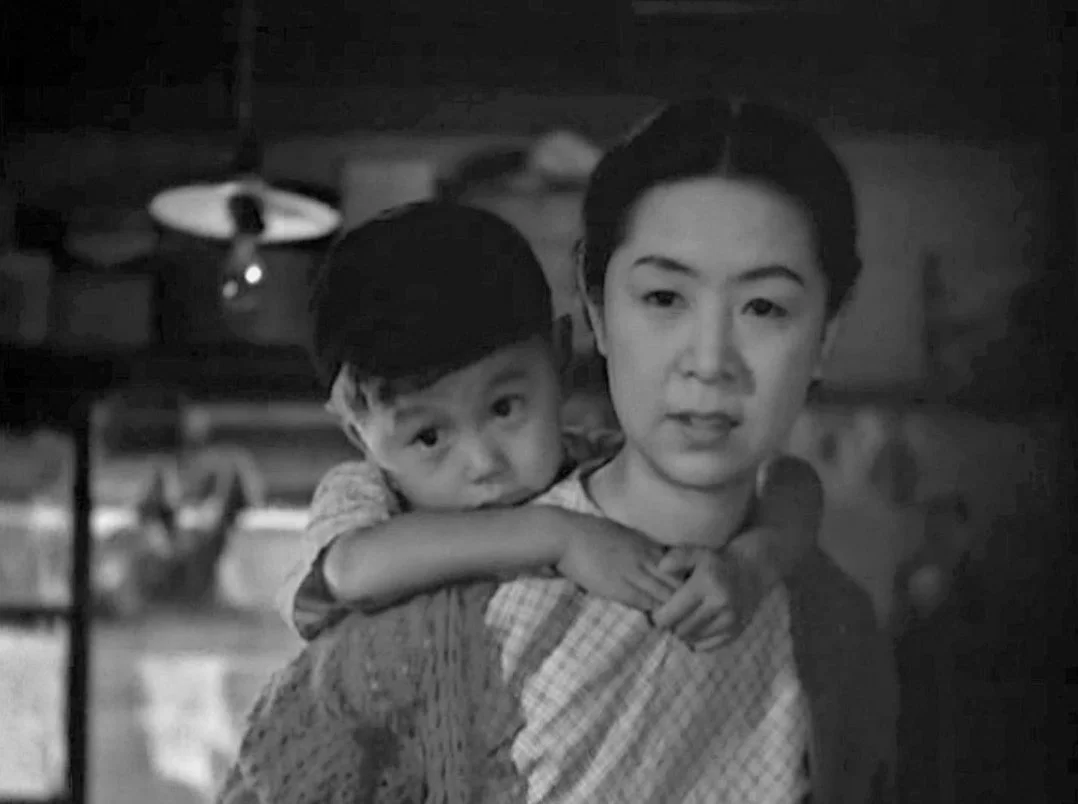
image: Shochiku
Director: Yasujirō Ozu
Writers: Yasujirō Ozu, Ryosuke Saito
Cast: Kinuyo Tanaka, Shūji Sano, Chishū Ryū, Hohi Aoki, Chiyoko Ayatani, Chieko Murata, Reiko Mizukami, Takeshi Sakamoto
Run Time: 1h 24m
UK Rating: PG
7/10
We are huge fans of Yasujirō Ozu here at The Film List, A Hen in the Wind (Kaze no naka no mendori) is not the best film to start with if you’re new to the director’s filmography. It isn't a bad film by any metric, it's just almost unrelentingly grim and missing much of the levity and humour that marks out much of his best work. It’s a difficult watch, especially for those sensitive to the horrors of domestic violence. Informed by the deprivation and scarcity of post war Japan, the film is unflinching about the damage wrought by the conflict on the population and its long lingering effects. The meticulous, patient camerawork that Ozu is known for becomes almost excruciating in how it reinforces the static, industrial world that these people inhabit.
Kinuyo Tanaka plays Tokiko, a mother waiting for the repatriation of her husband. She boards with her infant son Hiro, in the upstairs section of a house in an industrial area of Tokyo. Times are incredibly hard and she scrapes by making dresses, depriving herself for her infant child. An acquaintance keeps suggesting that Tokiko works at a brothel in order to improve her situation but times are not that hard yet. When Hiro falls suddenly ill and requires ten days in hospital, Tokiko despairs that she cannot afford the bill and in desperation resorts to a night of prostitution. Hiro recovers but his mother struggles with the weight of her decision and is still wracked by guilt when her husband Shuichi (Shūji Sano) finally returns. As Shuichi finds out about what Tokiko did for their son the film pivots to focus on the father. Will he be able to reconcile with the hopeless choice his wife made and will their relationship be able to recover?
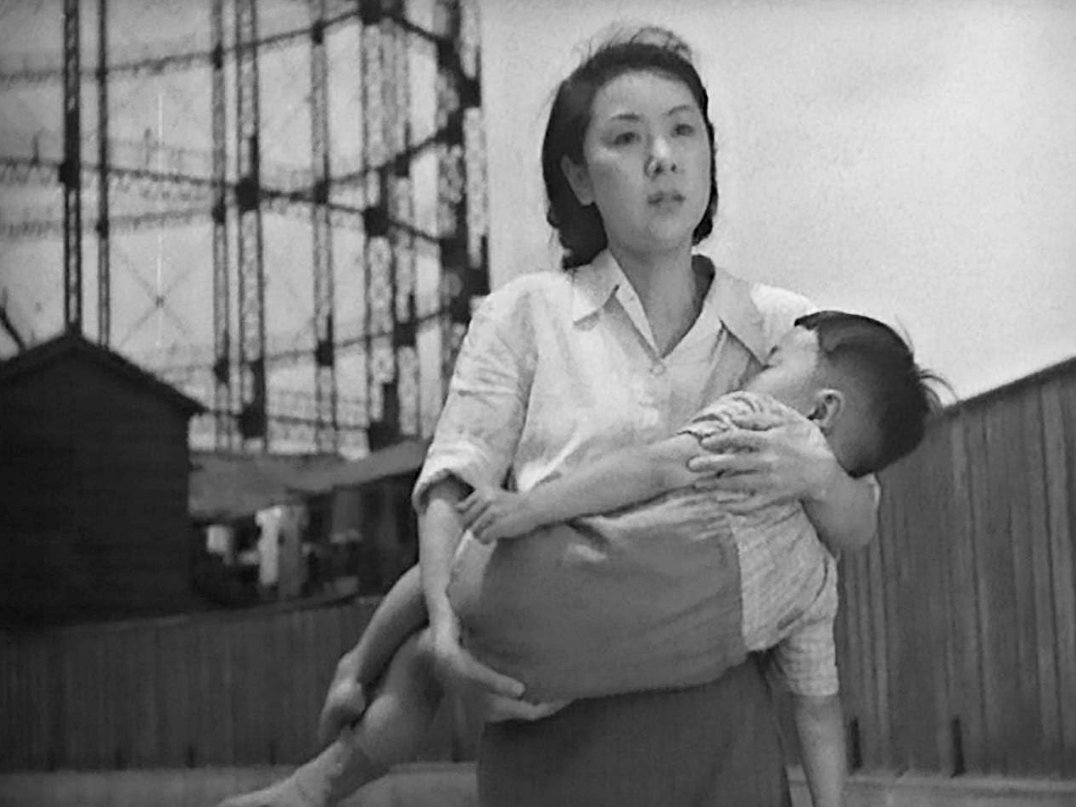
image: Shochiku
Kinuyo Tanaka’s performance is heartbreakingly convincing. Trapped in a world in which she has no agency or escape, Tokiko simply does what she must for her son. Her decision is presented with uncritical detachment from Ozu who avoids focusing on the deed itself. Instead the director centres our gaze on Tokiko, on how much the guilt haunts her. Ozu’s films are marked by countless explorations of the societal and social pressures on Japanese women but rarely is it explored with such raw clarity. The film’s second half which follows Shuichi almost works in parallel. He retraces his wife’s steps and crosses the same scarred industrial landscape looking wild and stricken. Shuichi can’t be viewed as a sympathetic character, being too cruel and hypocritical but it’s clear it is his own trauma guiding him. Sano is best in the scenes just following Shuichi’s return. He’s been away for so long that his young son no longer recognises him and the picture of Hiro’s handprints that he’s clung to are massively outdated with how much he’s grown. Ozu regular Chishū Ryū makes a welcome appearance as Shuichi’s level headed coworker who urges understanding and forgiveness.
The film is not an easy watch. Tokiko is an immediately sympathetic character and witnessing her being condemned by her husband and her own guilt is harrowing. She's discarded her own ambitions and aspirations to devote herself entirely to her son and her decision was governed by that love. There’s elements of Thomas Hardy or Charles Dickens in how we see Tokiko judged and the callous societal pressures that contributed to her desperate decisions. It’s difficult to not view Tokiko as an avatar for post war Japan’s struggle to reconcile with damage done to the national psyche in defeat and Shuichi as the generation of men brutalised by their experiences.
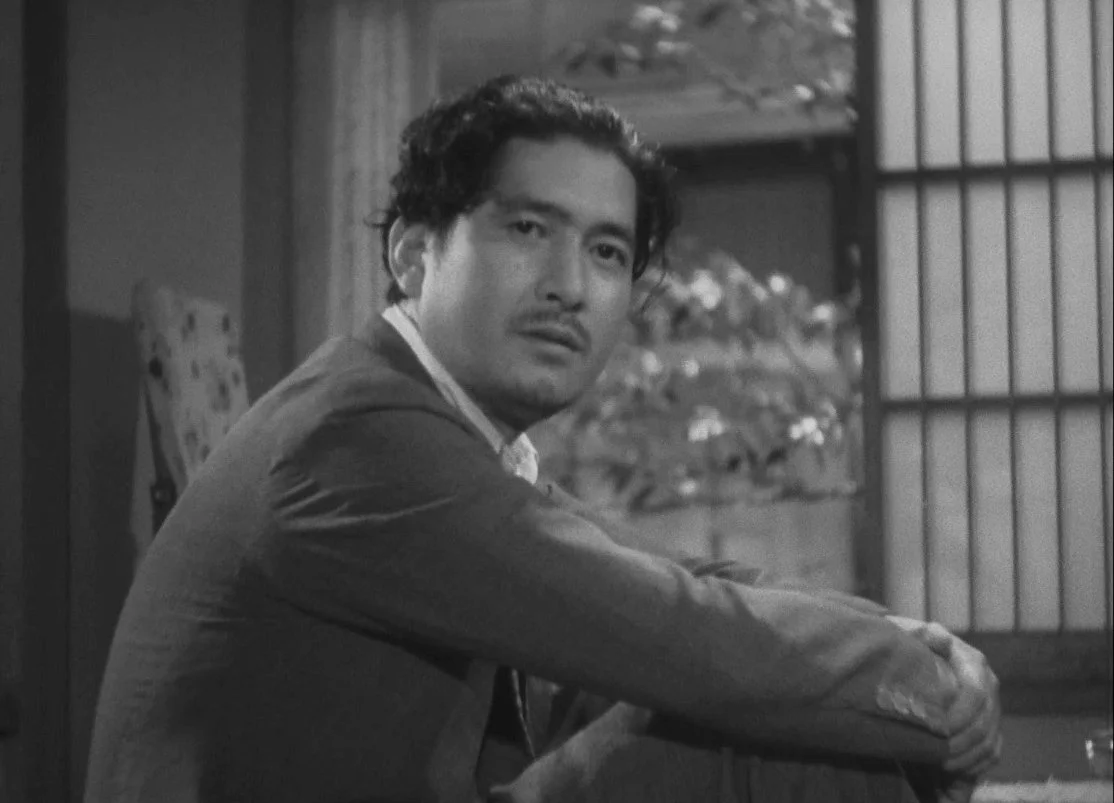
image: Shochiku
A Hen in the Wind is Ozu’s most vitriolic film in its portrayal of the deprivation endured by Tokyo’s working class, the film feeling like a precursor to Britain’s Kitchen Sink dramas of the fifties and sixties. The setting is kept firmly in the audience's mind with numerous shots of the massive, monolithic gasometer (gas holder) which looms over the cramped streets. The director treats each character with tenderness and empathy, especially when the exhausted looking Tokiko watches over Hiro in the hospital. Every moment of the child’s illness, though not given too much screentime, feels painfully long and is reinforced with lingering shots of the clock in the hospital corridor. The following year Ozu would direct Late Spring (1949), the film that cemented his style and themes and dispensed with much of the overwrought melodrama of his earlier films. In that regard A Hen In the Wind is a transitional move into the more transcendental work of his later career.
So while I think A Hen in the Wind is undoubtedly excellent, it’s difficult to recommend to anyone but those who are already devotees of Ozu. A grim curio for those scouring through what is left of the auteur’s earlier work. The film's conclusion, which surely had the intention of being optimistic, feels like a wilful ignorance on the character’s part. An act of deliberate amnesia that probably alludes to what Japan itself would collectively do with the horrors of the war years. I do believe it should be watched though, in particular for Kinuyo Tanaka’s spellbinding performance. But be prepared for the film to linger in your thoughts long afterward.
Watched on BFI Blu-ray - Included with An Autumn Afternoon (1962)
Published 31st August 2026