
Review
Three Thousand Years of Longing (2022)
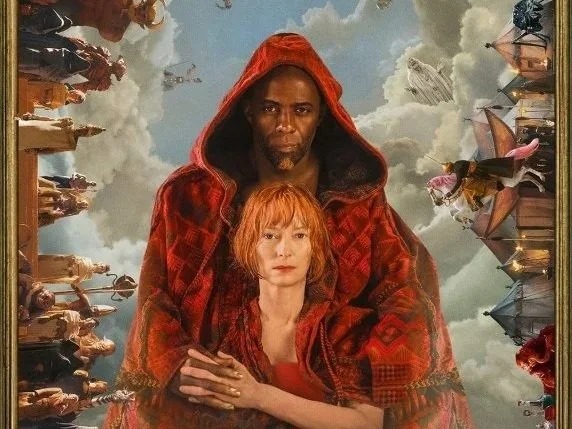
image: MGM Studios
Director: George Miller
Writers: George Miller, Augusta Miller
Starring: Tilda Swinton, Idris Elba, Burcu Gölgedar, Ogulcan Arman Uslu, Ece Yüksel
Run Time: 1h 48m
UK Certificate: 15
10/10
Following the massive success of Mad Max: Fury Road George Miller has produced what is clearly a passion project of his, an adaptation of A. S. Bryant’s The Djinn in the Nightingale’s Eye. Miller’s career is nothing but varied though so following up such a cynical, brutal film with one more interested in mythological debate and portraying a visceral sense of yearning is not surprising. A film over a decade in the making it has been produced with care and attention by a crew clearly intent on supporting and showcasing the director’s vision.
Three Thousand Years of Longing stars Tilda Swinton as narratologist (scholar of stories) Alithea Binnie who is plagued by nightmarish visions whilst she is lecturing on her subject in Turkey. After discovering a decorative flask (Çeşm-i Bülbül or Nightingale’s Eye) neglected and buried in a shop within a bazaar she unleashes a Djinn into her hotel room. Initially gargantuan filling the room he quickly becomes a manageable though still giant size and adapts quickly to modern English. As expected he offers to grant her the three wishes (with three restrictions) but being an expert in stories she understands the perils and pitfalls of those that are offered this opportunity. She’s too aware of the tricksters and malicious, conniving sprites that myth and legend are populated by despite the Djinn’s assurances to the contrary she feels cannot trust him. The physical existence of the Djinn depends on granting Alithea’s requests and so he needs to persuade her, using tales of magic and myth to argue against rigid logic. He relates three stories from his past of lust for power and a desire for knowledge and how love makes us vulnerable and prone to rash, impulsive decisions. These lavish, historical tales are presented like an anthology collection juxtaposed against the drab, faceless modernity of the hotel room.
As Alithea reminds us though tales of Djinns are all cautionary tales, allegories that show the consequences of trying to fulfil our hearts deepest desires. This film is no different, it is a visual fairy tale with its own logic and reality giving us a modern interpretation of ancient tales (The Arabian Nights is a clear influence) but still adheres to their rigid morality. What Miller (and his daughter Augusta who co-wrote the film with him) focus the intersection of magic and science and our need for stories that adapt to our understanding of the world. It’s woven into the fabric of the narrative and we see it played out from various different perspectives. As we watch a creature of unfathomable power marvel at the wonder of television, the film brings to mind Arthur C. Clarke’s quote “any sufficiently advanced technology is indistinguishable from magic”.
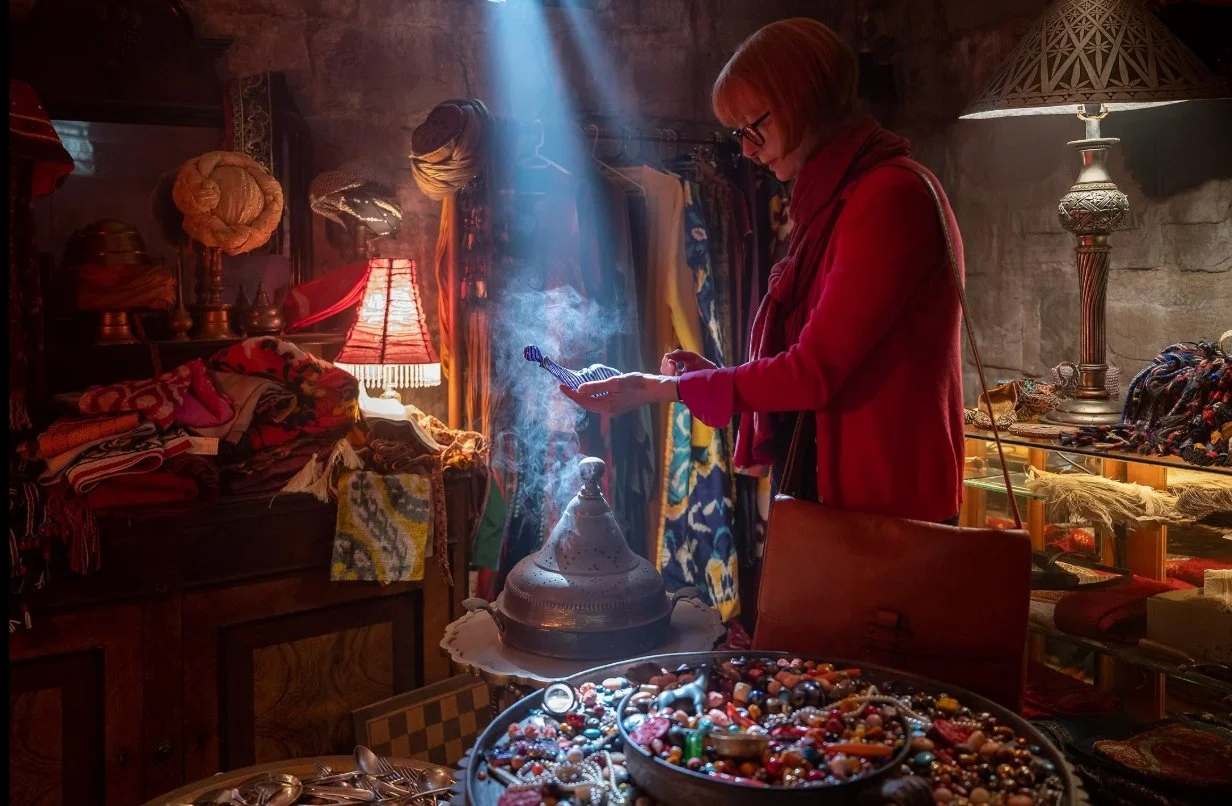
image: MGM Studios
Alithea is content in her academia, someone whose life is devoted to her work. The Djinn represents a wrinkle in her controlled, ordered world and is mostly an inconvenience. Her polite, measured frustration is informed by her intelligence, she knows the Djinn can’t offer anything that won’t come without strings attached. Swinton’s clipped Yorkshire accent gives Alithea such a singular charm and seems to a tribute to A.S Byatt the writer of the novel (who was born in Sheffield) as does the characters initials. This is a character who has immersed herself in solitude (her only contacts seem to be professional) and although she claims this isolation is self imposed her relish in conversing with the Djinn highlights humanity’s need for connection. Elba’s Djinn is a fantastic creation, finding childlike amusement and wonder in humanity’s advancements whilst barely concealing the lasting pain of his past. His soft, patient vaguely middle eastern voice is what we’ll hear the most and it’s nice to be reminded of Elba’s vocal range as he serves to narrate the film’s cautionary tales evoking always the title’s longing. His gentle speech is in contrast to the characters physicality, he’s too big for our world (even after shrinking) and his relief at finally being released from his prison is obvious in how he stretches out his fingers and paces around the room.
The three stories told within the film have an unreal, otherworldly quality similar to Tarsem Singh’s The Fall (2006) in how it presents the past as something fantastical and surreal. The Djinn’s contradicts what Alithea knows about history, insisting that his version of events was how it actually happened – after all he was there. The special effects do a great job of establishing a consistent visual identity between the different time periods and John Seale’s (who came out of retirement for a second time for this film) cinematography is sumptuous feast of colour. There’s a sense of scale and grandeur to the Djinn’s story and the scenes are rich with detail and depth. Tom Holkenberg (Junkie XL) adds brilliantly to this sense of place and time with a score that mixes different styles and musical genres being evocative without ever becoming overbearing.
I suspect that people’s enjoyment of Three Thousand Years of Longing will hinge on their willingness to engage with the film on it’s level. Its earnestness and romanticism is sure to be off putting for those used to deconstruction and cynicism, the film is more interested in updating these stories whilst maintaining their uncomplicated narrative directness. It is not a film aimed at children but like Matteo Garrone’s Tale of Tales (2015) or Neil Jordan’s Company of Wolves (1984) it sets to make an adult fairy tale that doesn’t remove any of the wonder or magic from the stories. There’s a sincerity in the film, rarely seen at the box office that is arresting, captivating and for those receptive to its ideas Three Thousand Years of Longing may prove to be a favourite.
Watched on Film4
Published 9th July 2026