
Review
Jamaica Inn (1939)
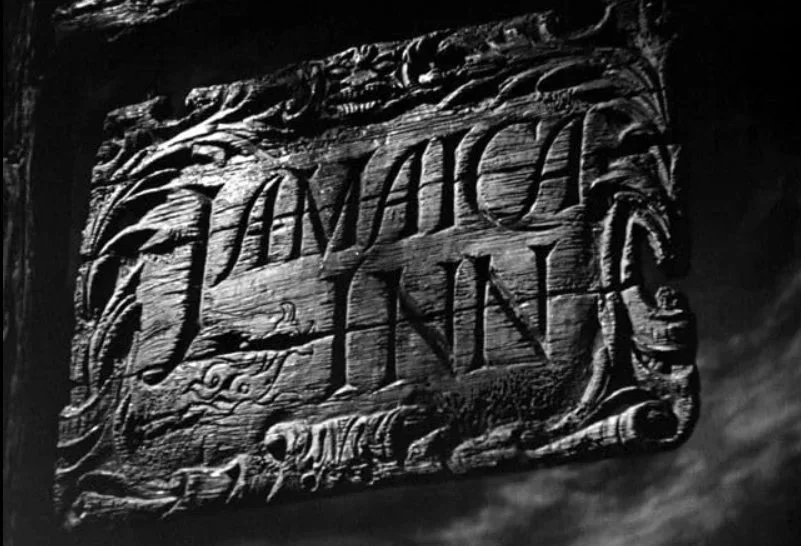
image: Associated British Picture Corporation
Director: Alfred Hitchcock
Writers: Sydney Gilliat, Joan Harrison
Starring: Charles Laughton, Leslie Banks, Maureen O’Hara, Robert Newton, Marie Ney
Run Time: 1h 48m
UK Certificate: PG
3/10
Jamaica Inn (1939) is undoubtedly one of Hitchcock's lesser works. It is a mess of contrasting tones, a plot that simply doesn't work and a performance that is best described as pantomime level. Though it’s obvious that the blame doesn’t lie with the director and he was simply bulldozed by Charles Laughton in his role as producer and star. Still that isn't to say there's no enjoyment to be had though its main interest may lie as a historical document of the director's career.
In 1820 on the wild, rural Cornish coast the titular Jamaica Inn serves as the base of operations for a bloodthirsty gang of criminals. They're Wreckers, thieves who lure unsuspecting ships to the shore to plunder their cargo and murder the surviving crew. When kind hearted Mary Yellan (Maureen O’Hara) arrives to stay with her aunt Patience (Marie Ney) the keeper of the titular Inn, she draws the attention of the gang ran by her uncle Joss Merlyn (Leslie Banks) and the villainous local squire Sir Humphrey Pengallan putting her life in danger. Together with officer of the law Jem Trehearne the pair must work to bring the gang to justice. The story which is radically changed from Daphne Du Maurier’s novel is a mess, though it's difficult to blame either Hitchcock or the screen writers for the problem. Celebrated screenwriters Joan Harrison and Sidney Gilliat (with additional dialogue by J.B Priestley) all contributed to the film but it shows none of the quality of their other works. The following year Harrison (a long time collaborator with Hitchcock) would co-write Rebecca (1940) with Robert Sherwood and show good understanding of the gothic charm of Daphne Du Maurier's book which this film sadly lacks. The author was so disappointed and dismayed with the finished film that she temporarily withheld the rights to Rebecca from Hitchcock.
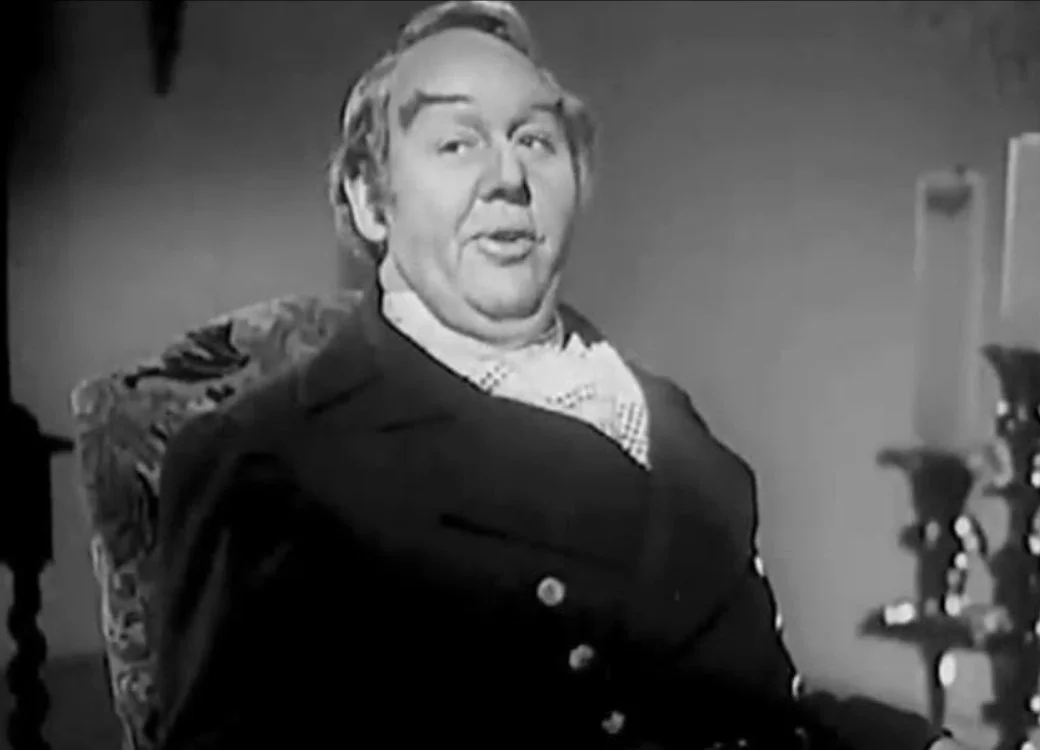
image: Associated British Picture Corporation
Jamaica Inn was produced by Charles Laughton’s own Mayflower productions and he made sweeping changes to suit his own whims. After being cast as Joss Merlyn he switched to Squire Pengallan (changed from the book’s preacher due to Hollywood's decency codes) and demanded more screen time. This necessitated further rewrites and meant that the villain's shock reveal at the ending of the book needed to be announced at essentially the start of the story. He also decided upon a mincing walk for the character which he said he timed in his head to a German Waltz that Hitchcock thought was wildly out of character. Not all of his demands were detrimental to the film, his insistence on the casting of Maureen O’Hara (he found her eyes during the audition unforgettable) is without doubt one of the film's saving graces.
Laughton dominates the film with a ludicrous, scenery devouring performance. It’s terrible and completely at odds with the tone of the narrative but it is still easily the best and most memorable thing about the film. His outfit, which is cinched so tight around him that it appears to restrict movement, is somehow less ridiculous than his artificial eyebrows that curl around his head and draw in your attention better than anything else that film has to offer. He delivers each line with a theatricality that goes beyond what you would expect of even his character’s pompous bearing, completely overpowering every other actor on screen. We at The Film List love Laughton, and his starring role in Hobson’s Choice remains one of our favourites but everything about this role is massively misjudged though admittedly thoroughly entertaining.
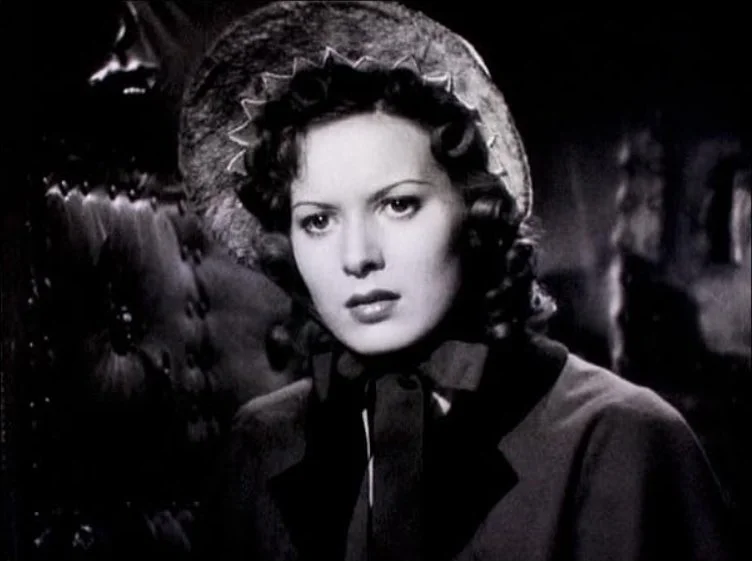
image: Associated British Picture Corporation
The film was Maureen O’Hara debut starring role (though she had already shot My Irish Molly it would not release until the following year) and we can see the forthrightness that stood her so well against John Wayne. There's not much in the role but to be prey for her predatory uncle and his gang but O’Hara still does admirably with the limited role. Where she shines is when she’s forced to stand her ground against the wreckers and Trehearne as she strives to protect her aunt from the law. Robert Newton tries his best but is simply lost as lawman Trehearne, who is easily outwitted at every turn. Despite his attempts at appearing heroic he appears naive and outmatched at every turn, there's also too few scenes with O’Hara for him to be convincing as a romantic lead. More successful however is Leslie Banks’ Joss Merlyn (leader of the Wreckers) whose leering gaze is genuinely unsettling and his wife Patience (Marie Ney) who appears shellshocked by the criminality that surrounds her. The gang is rounded out by some notable character actors who aren’t given much at all to do besides their early marauding.
Better though is Bernard Knowles and Harry Stradling’s cinematography which lights the crumbling Inn with deep shadows and makes it look suitably ominous and foreboding. There are some excellent matte backgrounds that call to mind the Expressionism that Hitchcock had seen while working in Germany and lit like menacing gothic horror and it’s always a shame when the film returns to the rather flat, theatre-like sets. The special effects of the waves are (for the time) quite impressive and the opening Wrecker's attack on a stranded ship surrounded by crashing waves is brutal and harrowing. Although admittedly the ships being buffeted around look like shop bought toys with no sailors in sight. Worth noting too is the wreckers initial attack which is genuinely shocking as the gang murder the helpless sailors, dispatching them with a detached cruelty.
This would be Hitchcock's last film shot in England and you do get the sense of him simply finishing a contractual obligation. David O. Selznick had already offered the director a lucrative four picture contract that offered $40,000 (nearly a million dollars today) per movie and Hitchcock felt that he had exhausted his opportunities in the UK film industry. As is the film is a missed opportunity and clearly one that he lost control of due to Laughton’s interference. I do not agree with critic Michael Medved’s assertion that it is amongst the Fifty Worst Films of All Time (I don't even think it's Hitchcock’s worst) but there is little to recommend to anyone but completionists.
Watched on Amazon Prime.
Published 9th July 2026